

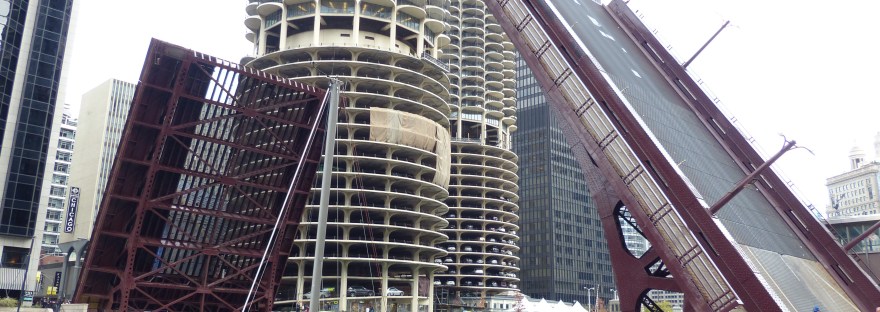
Dearborn Street Bridge with leaves raised
architectural photography, bascule bridges, Chicago's Bridges, Industrial heritage, Photography of Architecture, principles of architecture

The Dearborn Street Bridge: Chicago’s Bascule Bridges Integrate Architectural Planes into the City’s Dynamic Landscape.

Photograph by Divi Logan. 8 April 2025.

Introduction: What is a Bascule Bridge?

The word “bascule” comes from the French for “seesaw” and captures the idea of balancing the weight on either side of the pivot point. Bascule bridges use counterweights to help raise and lower the spans. Most of the bridges in use during boat runs along the Chicago River have two leaves, or sections.
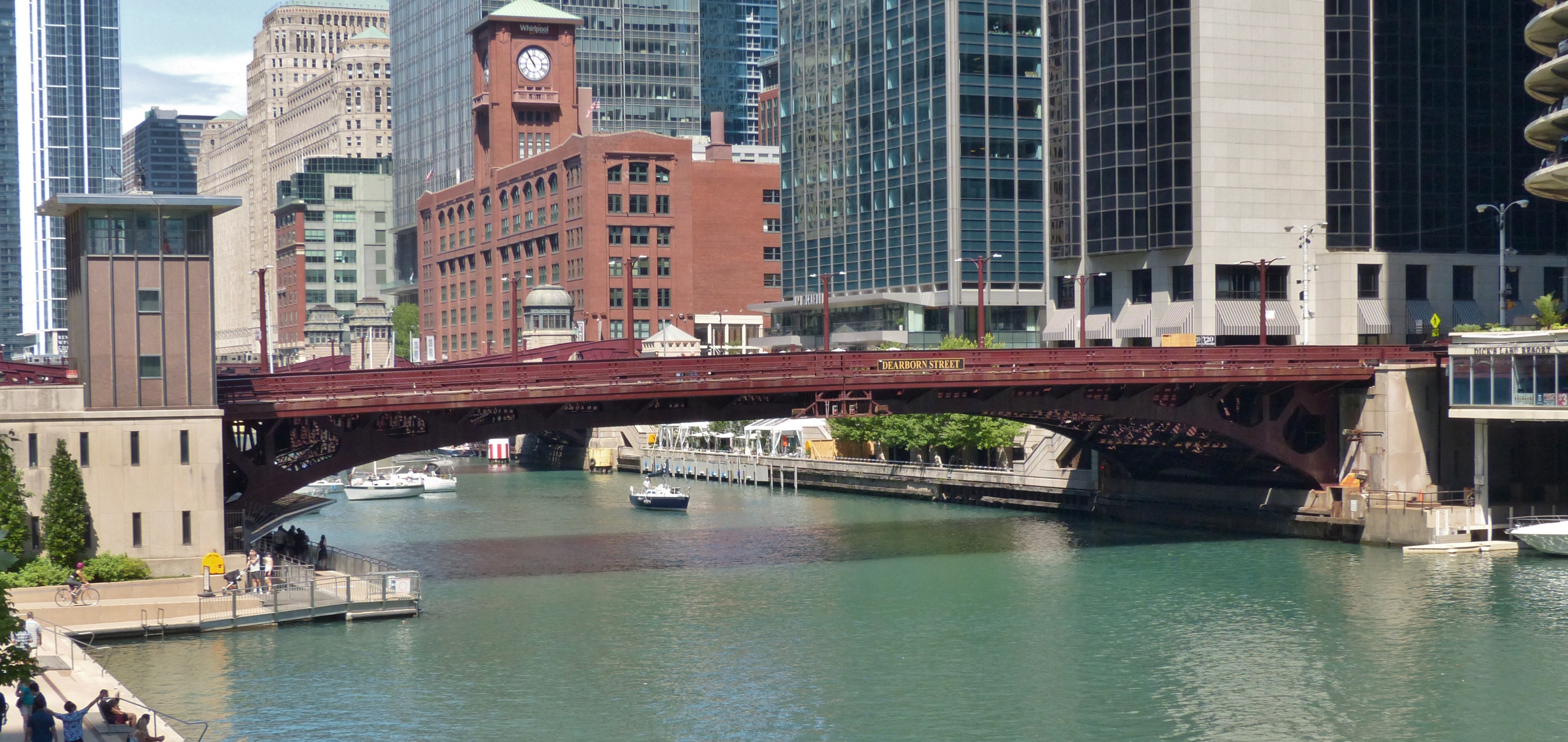
Dearborn Street Bridge in Chicago
The Dearborn Street Bridge, a bascule bridge over the Main Branch of the Chicago River, includes many types of architectural planes. The bridge deck is a horizontal plane, the primary plane which serves vehicles and pedestrian traffic, and the bridge tender’s house is a strong vertical plane. Inclined planes are in the truss of the bridge and are essential for structural integrity. There are curved planes in the trusses and the deck.
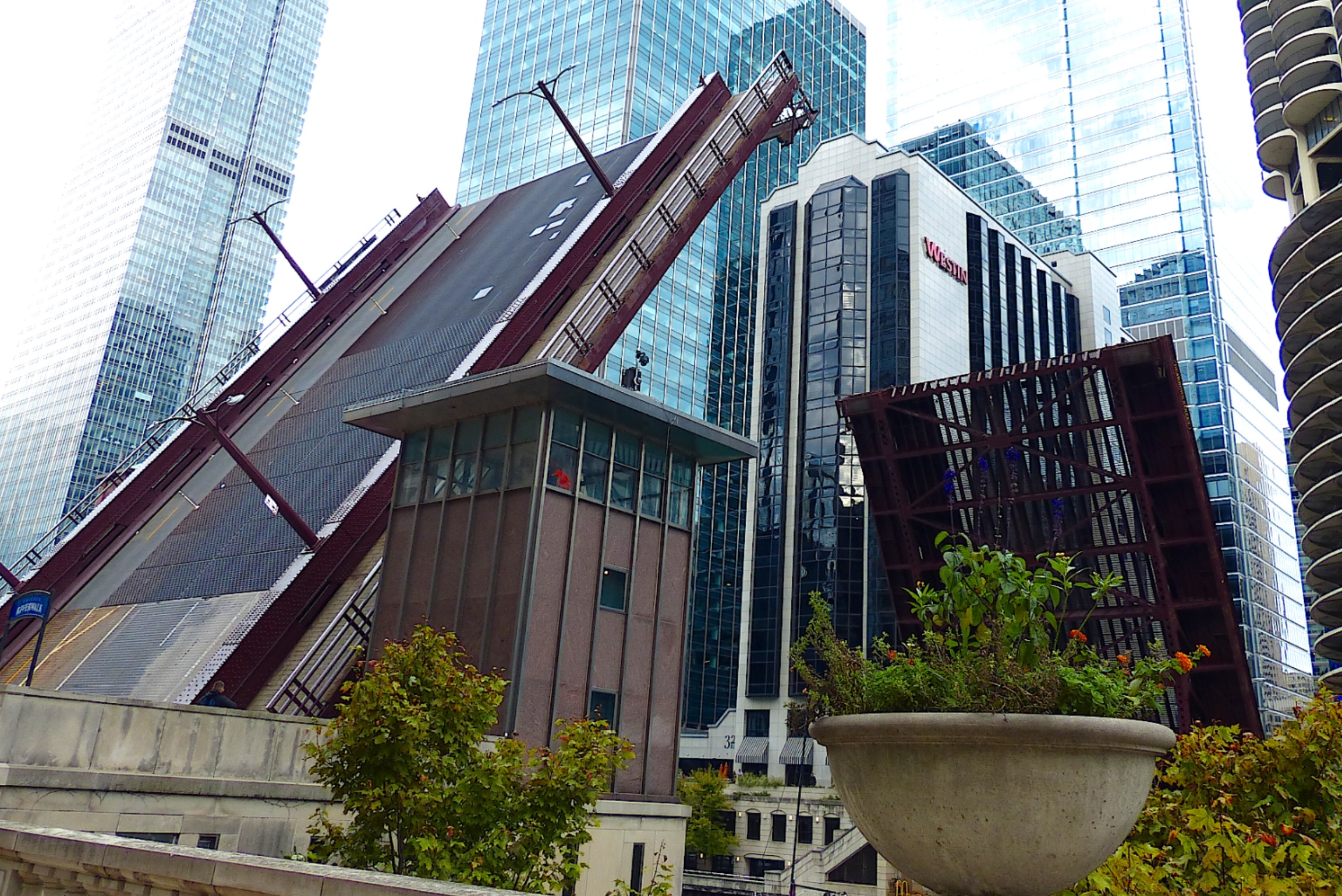
Deaborn Street Bridge leaves raised
The two leaves of the Dearborn Street Bridge are raised to allow passage of boats during one of the boat runs that allow passage of watercraft back and forth to Lake Michigan.

Adjacency and Access in the Urban Environment: Essential Principles in Urban Infrastructure

Chicago’s bascule bridges display the principles of adjacency and access, especially relevant to bridge design and transportation hubs.
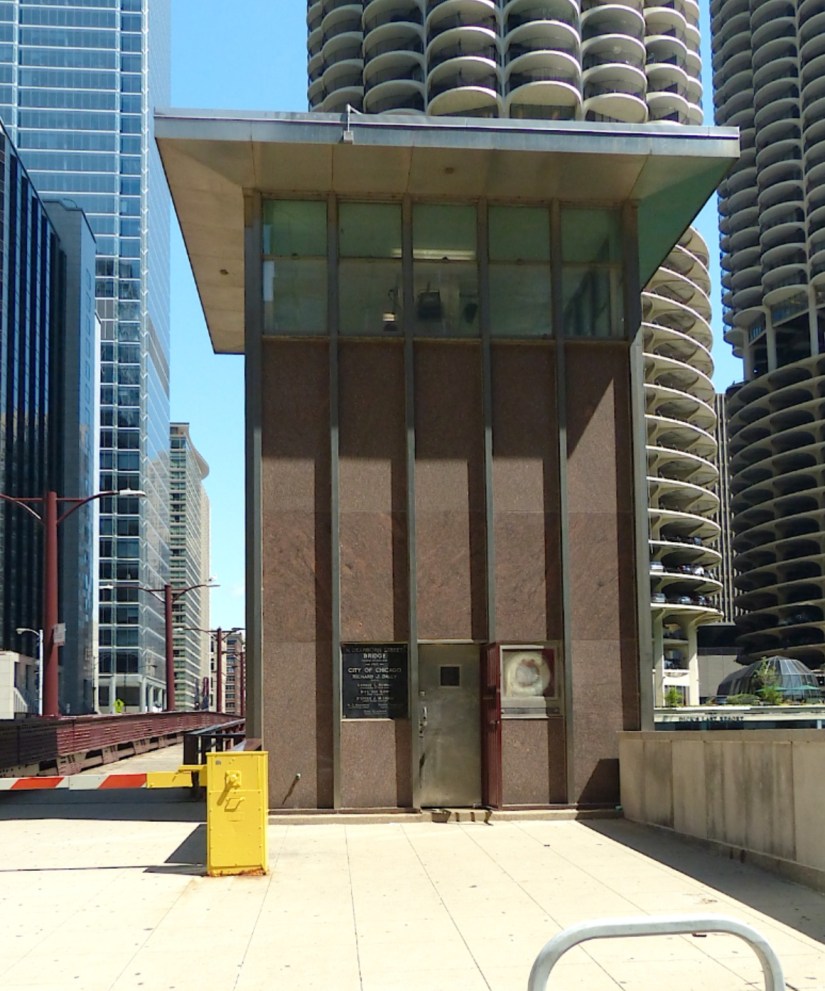
Dearborn Street Bridge tender's house
Bridge tender’s houses reflect the interplay of adjacency and access along the Chicago River. During the seasonal boat runs, controllers in these houses monitor traffic and raise the bridge to allow passage of boats. Situated near major streets and intersections, the house integrates seamlessly into the urban infrastructure network. This ensures that bridge operations do not disrupt the passage of vehicles and pedestrians unnecessarily. The design of the houses keeps with the era in which the bridges were constructed, contributing to Chicago’s historic aesthetic while maintaining functional urban connectivity.
Bridge operators access the houses from the sidewalks and control workings on the bridge, including the gates (one here shown with the yellow box and red and white arm), and the movement of the leaves, which make up the road deck. Dearborn Street Bridge: 1963.

Resources

  1. Microsoft Copilot. “Describe the architectural planes in the Dearborn Street Bridge.” Microsoft Copilot, copilot.microsoft.com/chats/tJNuHANqx38S9RDqQUnqF. Accessed 8 Apr. 2025.
  2. “Adjacency and Access in Urban Infrastructure.” Copilot, Microsoft, https://copilot.microsoft.com/chats/uJRdrJxurJ39rka9UcXpN. Accessed 9 Apr. 2025.
  3. “Principles of Adjacency and Access Related to the Dearborn Street Bridge Tender’s House.” Copilot, Microsoft, https://copilot.microsoft.com/chats/uJRdrJxurJ39rka9UcXpN. Accessed 9 Apr. 2025.

Discover more from Frame the Works

Subscribe to get the latest posts sent to your email.

Leave a comment