By Divi Logan. May 7, 2024.
Objects shine, shimmer, and gleam on walls, countertops, ovens and tables. Panes, parts of automobiles, cameras and telescopes, measuring cups, mirrors, artworks, jars and bottles made of it are in homes, businesses, hotels, schools, and offices. Some structures are sheathed in it.
The versatile material, which may be transparent, translucent, smooth and glossy is glass, and the use of it has a long, rich history.
What is Glass?
At the most basic degree, glass is made by heating a mixture of silica (or silicon dioxide), soda ash and lime (or limestone, calcium carbonate) and other ingredients (for colors, stabilizing, durability, chemical resistance) to high temperatures until it melts and begins to solidify and cool.
Glass is durable, resistant to heat and chemicals, and can be shaped and molded into various forms. It is produced in a wide range of unique compositions with distinct attributes.
1. Examples of Glass in Chicago Landmark Structures
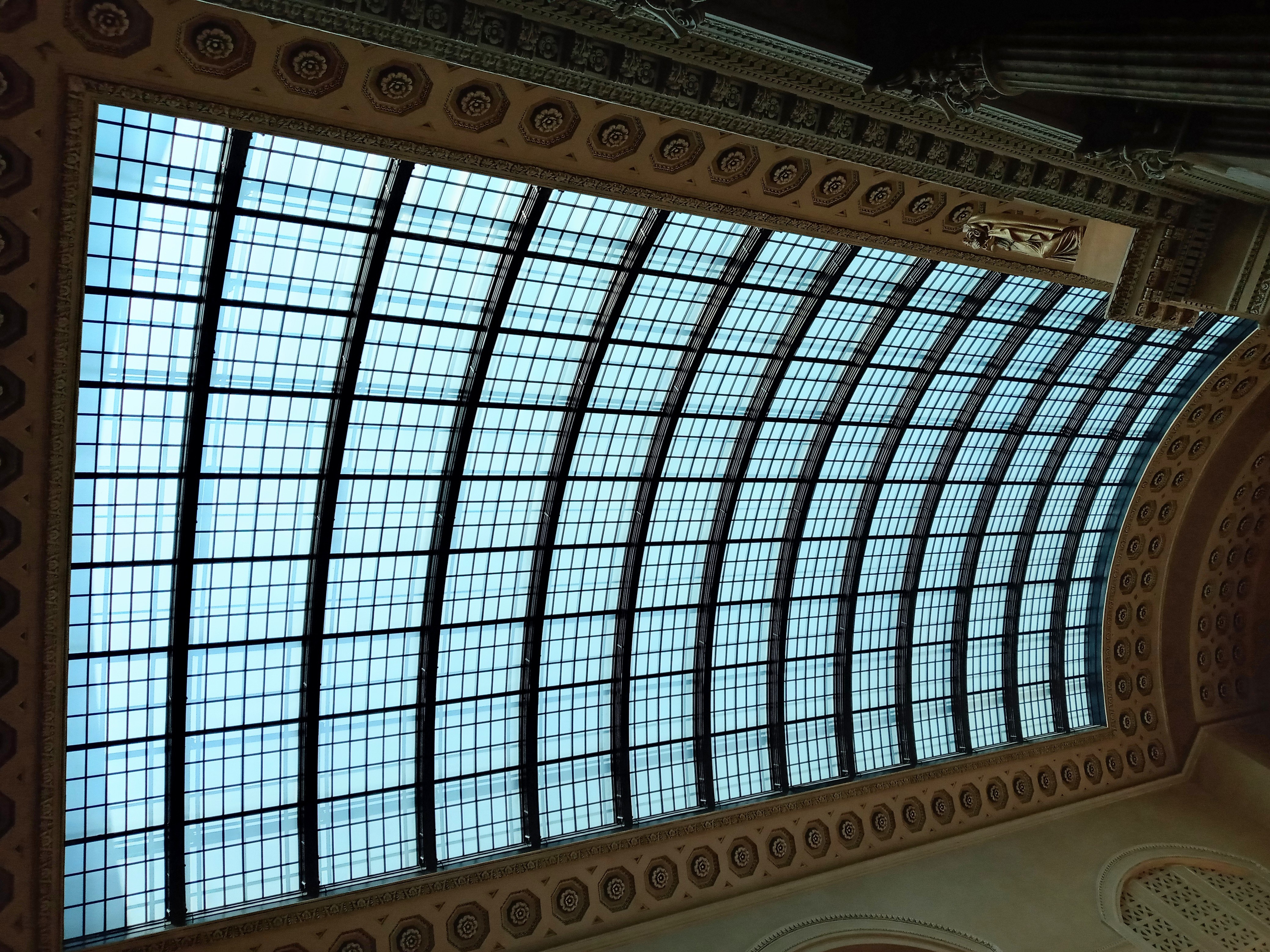
Dimensions of the original skylight:
Height above the hall: 115 feet
Length: 177 feet
Square footage: 18,000
Number of sections: 13 individual 12-foot-wide x 83-foot-long segmented sections with a total of 2,068 lights of ¼-inch wire glass.
Replacements of the original lights with 9/16-inch translucent, laminated, heat-strengthened glass. The new skylight is composed of 878 individual lights of high-performance glass with a low-e coating. Companies (industrial): Linetec, Viracon, Goettsch Partners. AMTRAK (owners of the station).
2. Structural Glass: Exteriors

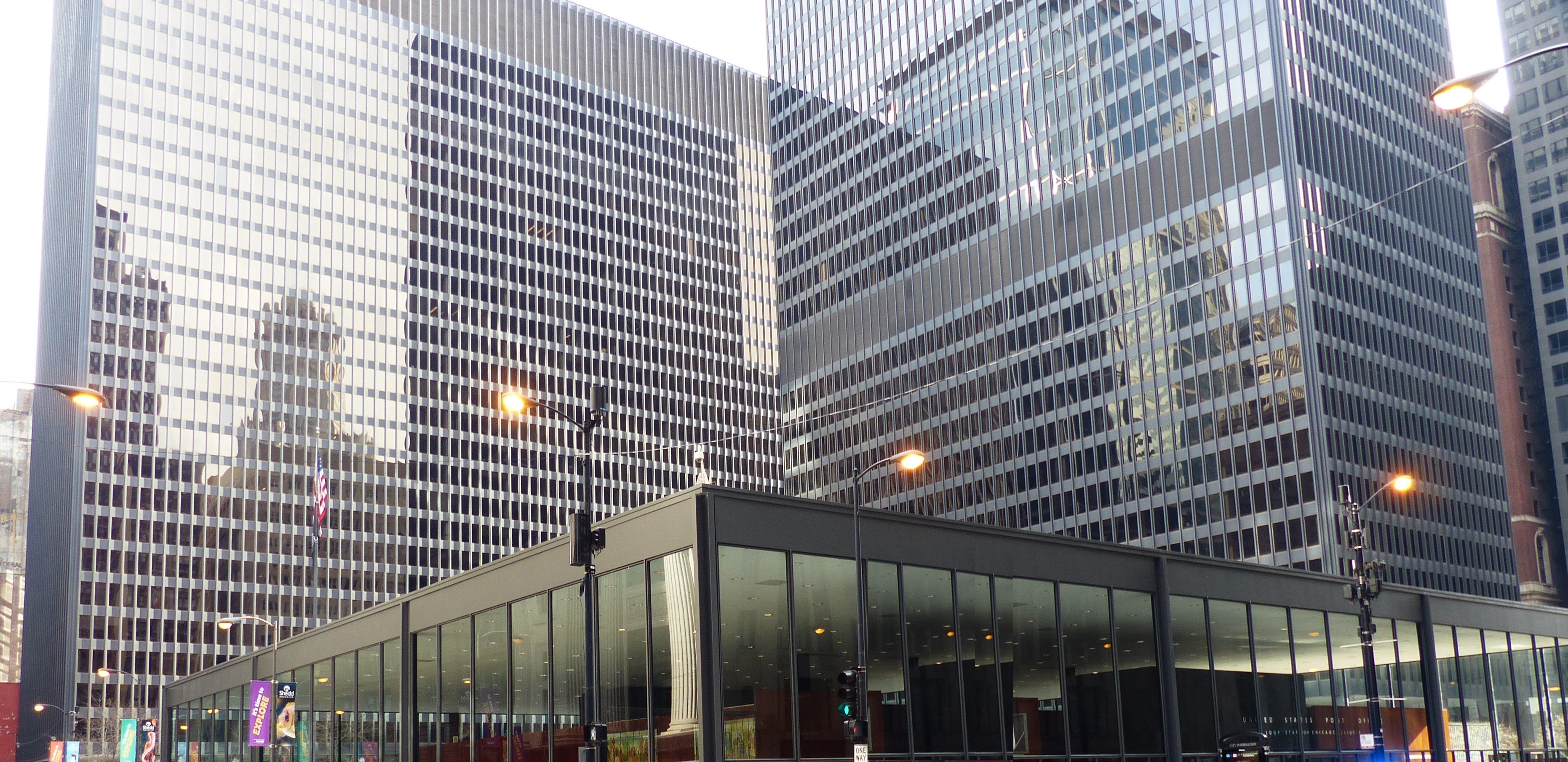
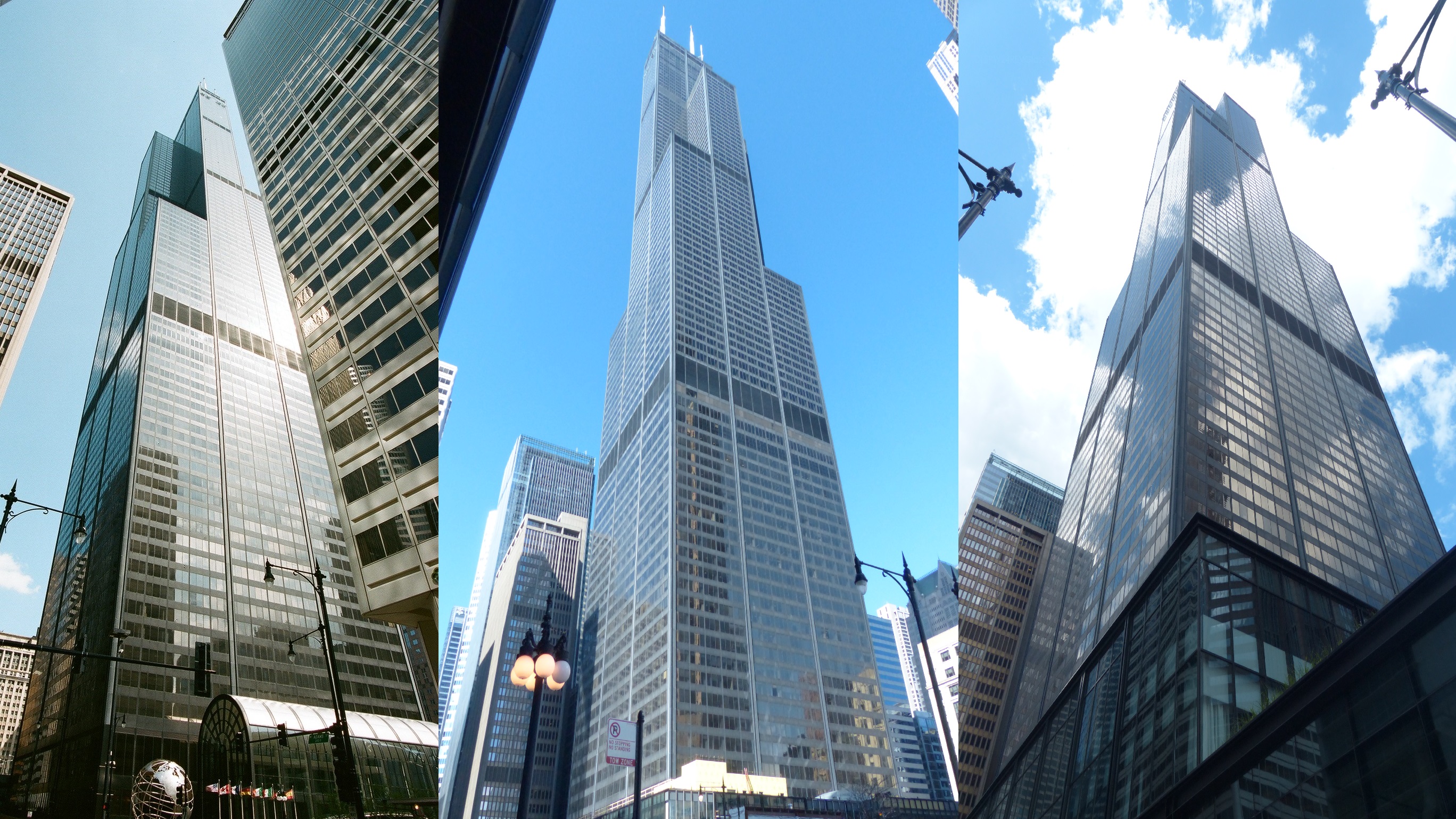

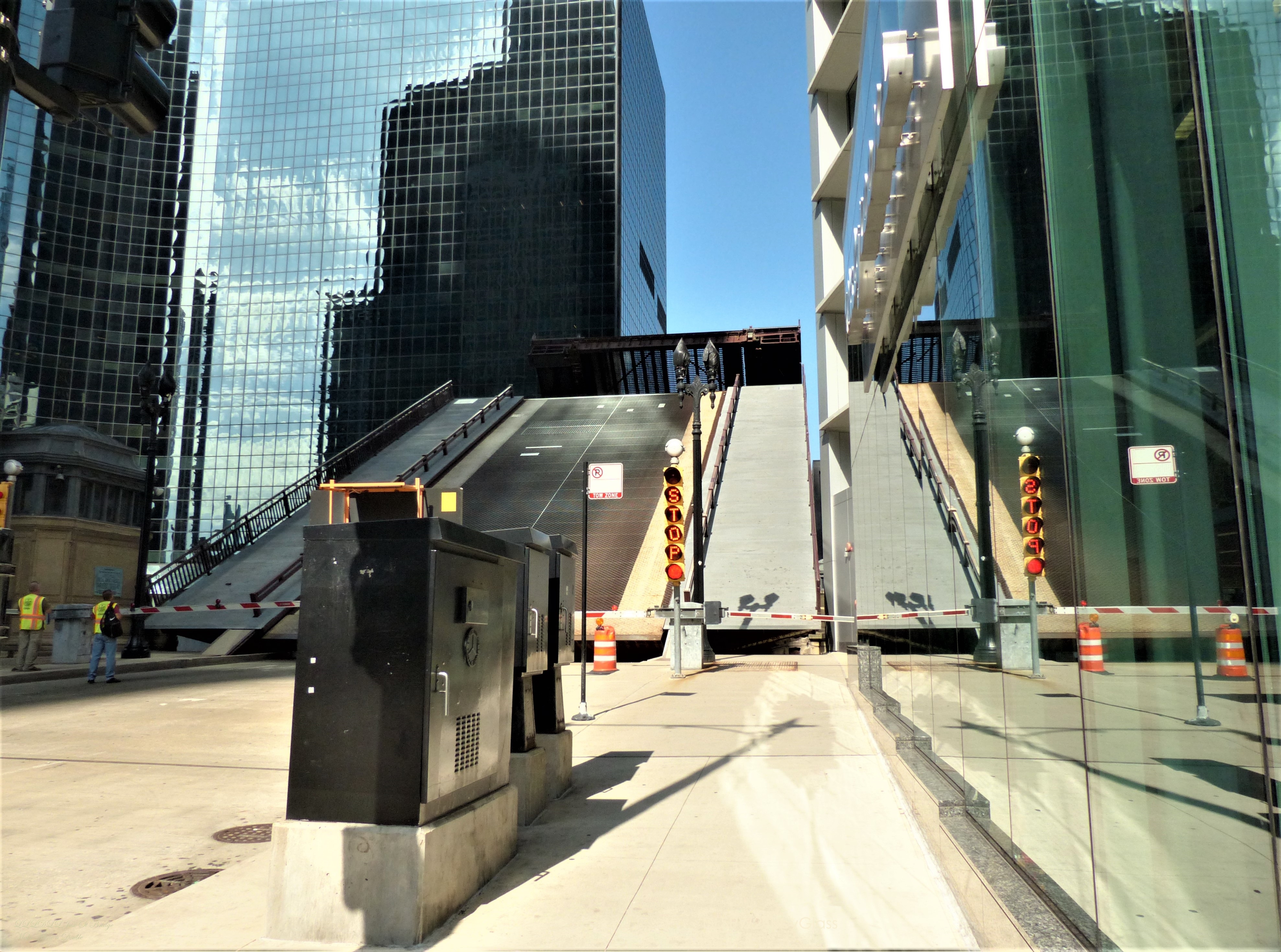
3. Structural Glass: Interiors and Curtain Walls
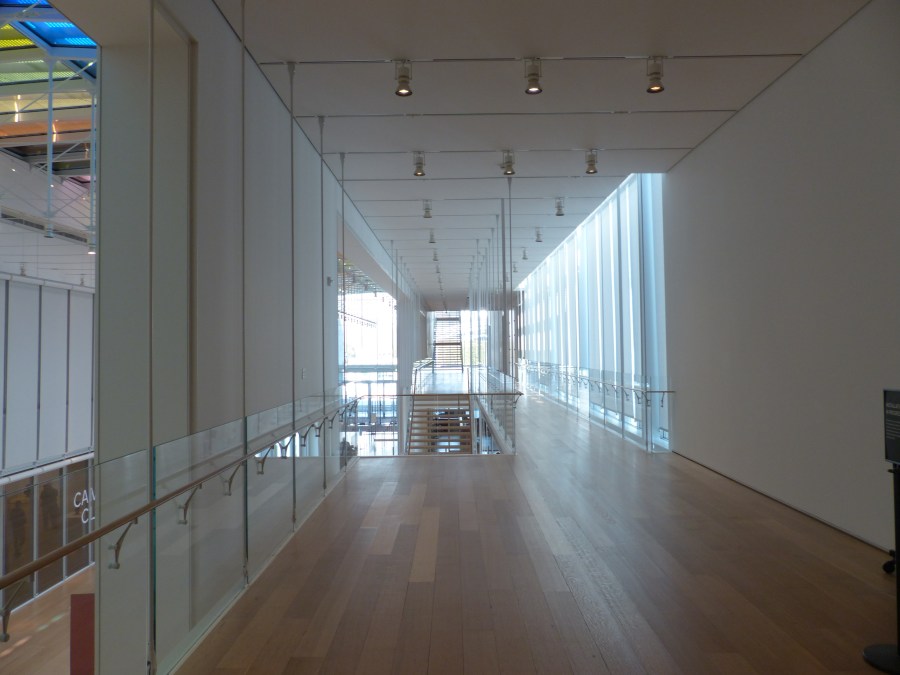

4. Functional Examples of Glassware (Crystal/Leaded Glass and Cut-glass)
Glassware with lead oxide has an early example from Mesopotamia around 3,600 years ago, and from Nippur (Sumerian), dating to 1400 BC.

Conclusion
Glass is an intriguing, versatile, and durable material that has many varieties and manufacturing compositions. It may be fragile or durable and is resistant to heat and chemicals, being melted to high temperatures and cooled until it begins to solidify. It is shaped and molded into various forms by glassblowers. It is now a ubiquitous medium, formed into windowpanes, drinking and eating vessels, measuring and cooking implements, mirrors, windshields, and lenses for cameras. In contemporary times it has been used to sheathe entire faces of skyscrapers.
Raise your imaginary glass to the skills of artisans and scientists who shaped and continue to evolve its history.
Resources
- “What is Glass? How Glass is Made? A Comprehensive Information 101.” Glassforum.org. https://glassforum.org/what-is-glass-how-glass-is-made/#google_vignette. Accessed 7 May 2024.
- Wikipedia contributors. “Glass.” Wikipedia, The Free Encyclopedia. Wikipedia, The Free Encyclopedia, 13 Apr. 2024. Web. 7 May. 2024.
- Copilot search. “Structural glass.” https://sl.bing.net/bfT04zHA9K0. 29 Feb 2024.
- Copilot search. “What kind of glass is use in the Sears Tower? Sent by you: What kind of glass is use in the Sears Tower?” 3 Apr. 2024. Web. 11 Apr. 2024.
- Wikipedia contributors. “Chicago window.” Wikipedia, The Free Encyclopedia. Wikipedia, The Free Encyclopedia, 25 Nov. 2023. Web. 14 Apr. 2024.
- Photograph of glass objects. Author’s collection. 7 May 2024.
- Linetec. “Chicago Union Station’s renovate Great Hall features new skylight finished by Linetec.” 8 July 2019. Chicago Union Station’s renovate Great Hall features new skylight finished by Linetec – Linetec. Accessed 14 April 2024.
- “300 South Riverside. Chicago.” 2024 Council on Tall Buildings and Urban Habitat. https://www.skyscrapercenter.com/chicago/gateway-center-iv/29246/. Accessed 7 May 2024.
- Copilot search. “Gateway Center IV Chicago. Sent by you: Gateway Center IV Chicago.” https://sl.bing.net/fR4FxYzSUmW. 7 May 2024.
- Wikipedia contributors. “Lead glass.” Wikipedia, The Free Encyclopedia. Wikipedia, The Free Encyclopedia, 28 Mar. 2024. Web. 8 May. 2024.
- Copilot search. “Loop Station Post Office who designed it? Sent by you: Loop Station Post Office who designed it?” https://sl.bing.net/hJRpXWKfnXw. 11 April 2024.
Discover more from Frame the Works
Subscribe to get the latest posts sent to your email.

 Frame the Works