Public Works, that is. Photographs and Research Documenting our Industrial Heritage. Includes Field Notes with Archival Quality Photographs and Cartographic Studies.
Chicago’s First Bridge Lift of Spring 2026 Makes Photography a Fun Challenge. Angles of Bridge Structures, Telephotos, and the Urban Environment. Frame the Works- Public Works, that is.
Article and photographs by Divi Logan.
The Gallery: Bridge Lifts and Boat Run of 22 April 2026
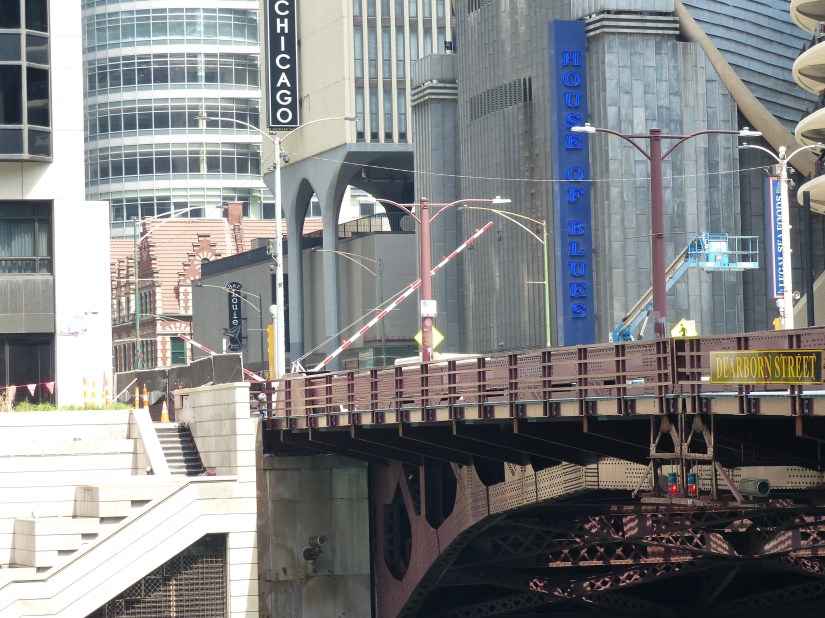
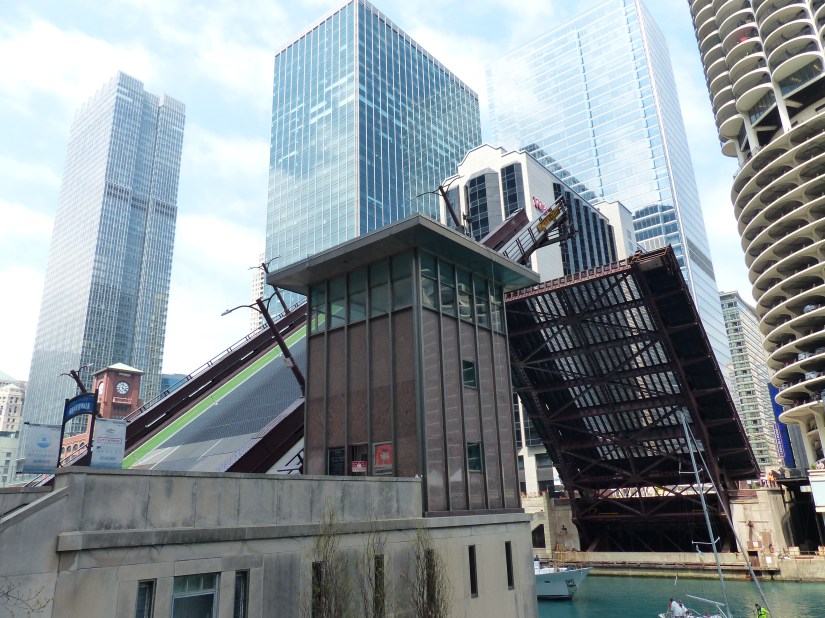
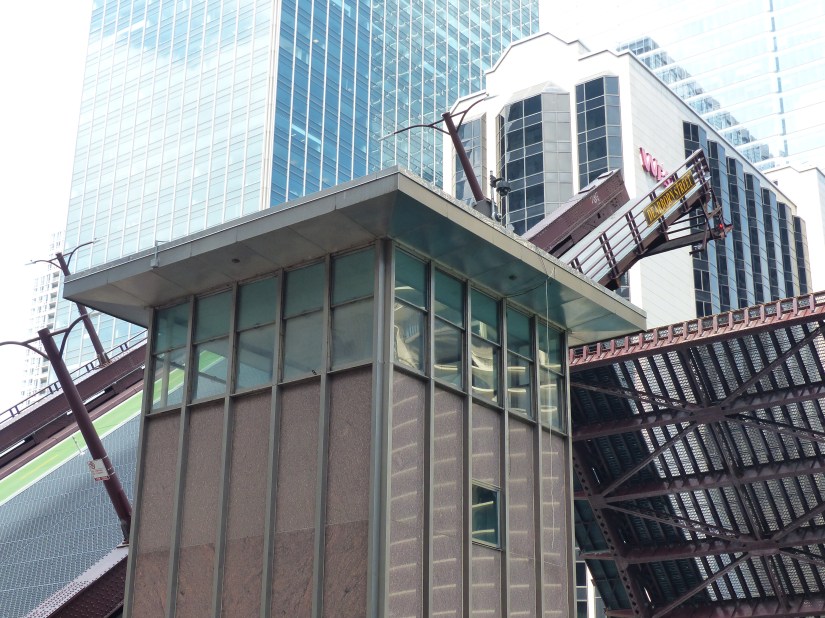
Dearborn Street Bridge: Date: 1962. Carries: vehicles and pedestrians over the Main Branch of the Chicago River. Awarded: Most Beautiful Steel Bridge in the Movable Span Category in 1963 by the American Institute of Steel Construction. A bridge was built there in 1834, when Chicago’s population was around 350.
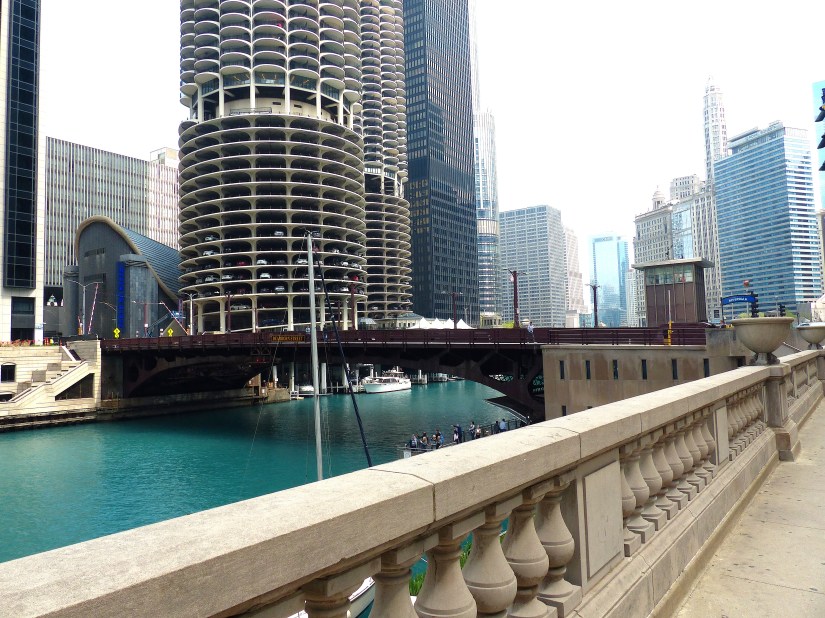
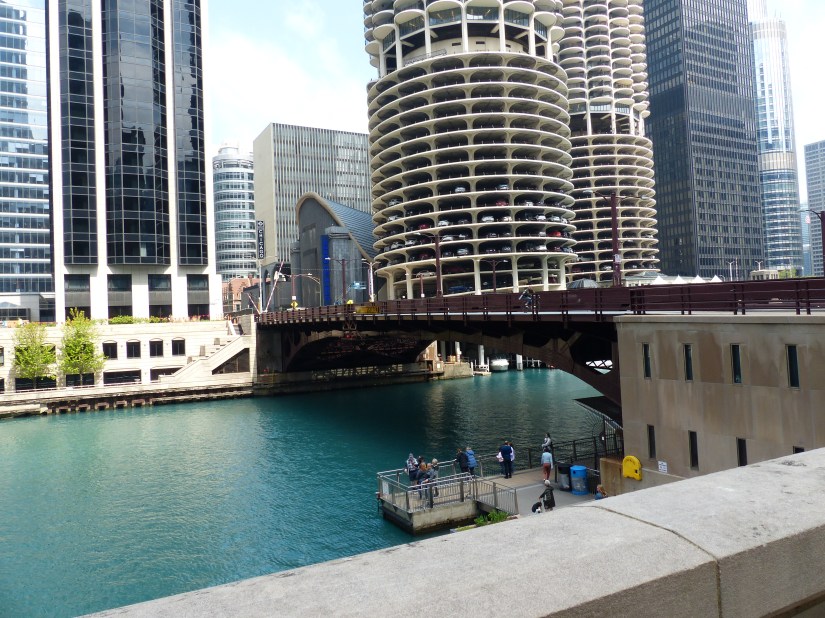
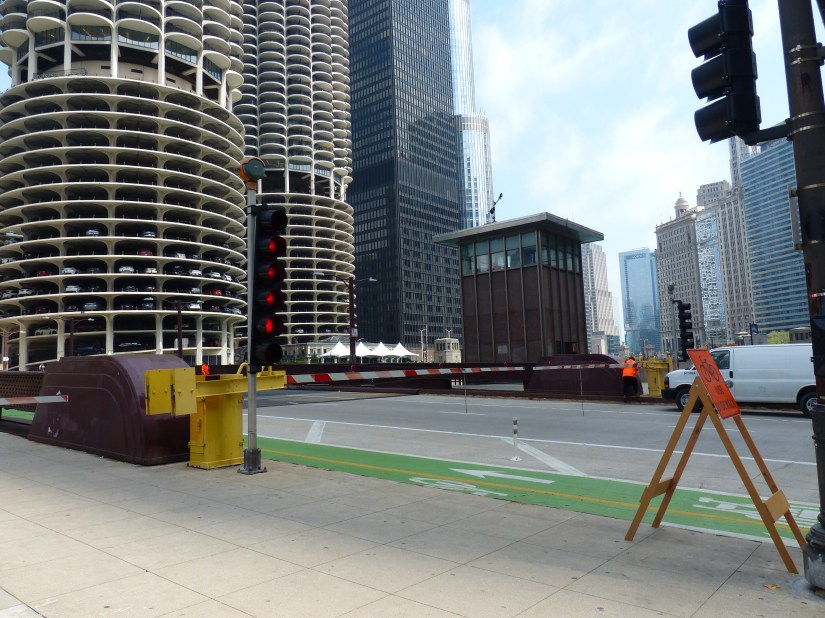
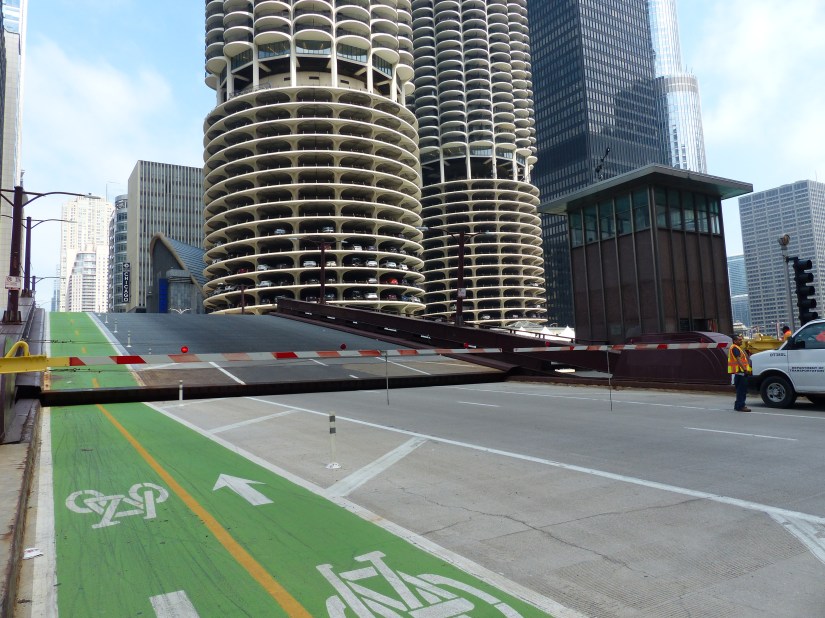
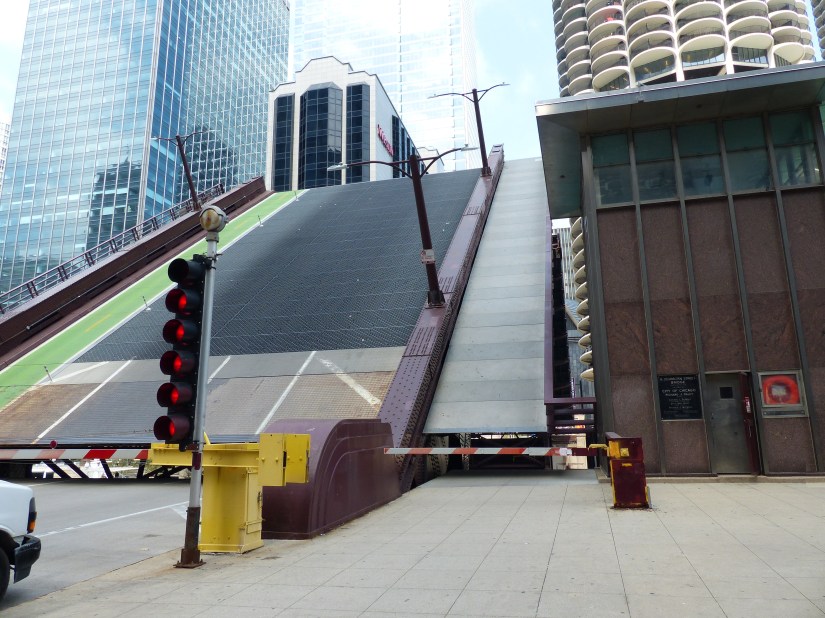
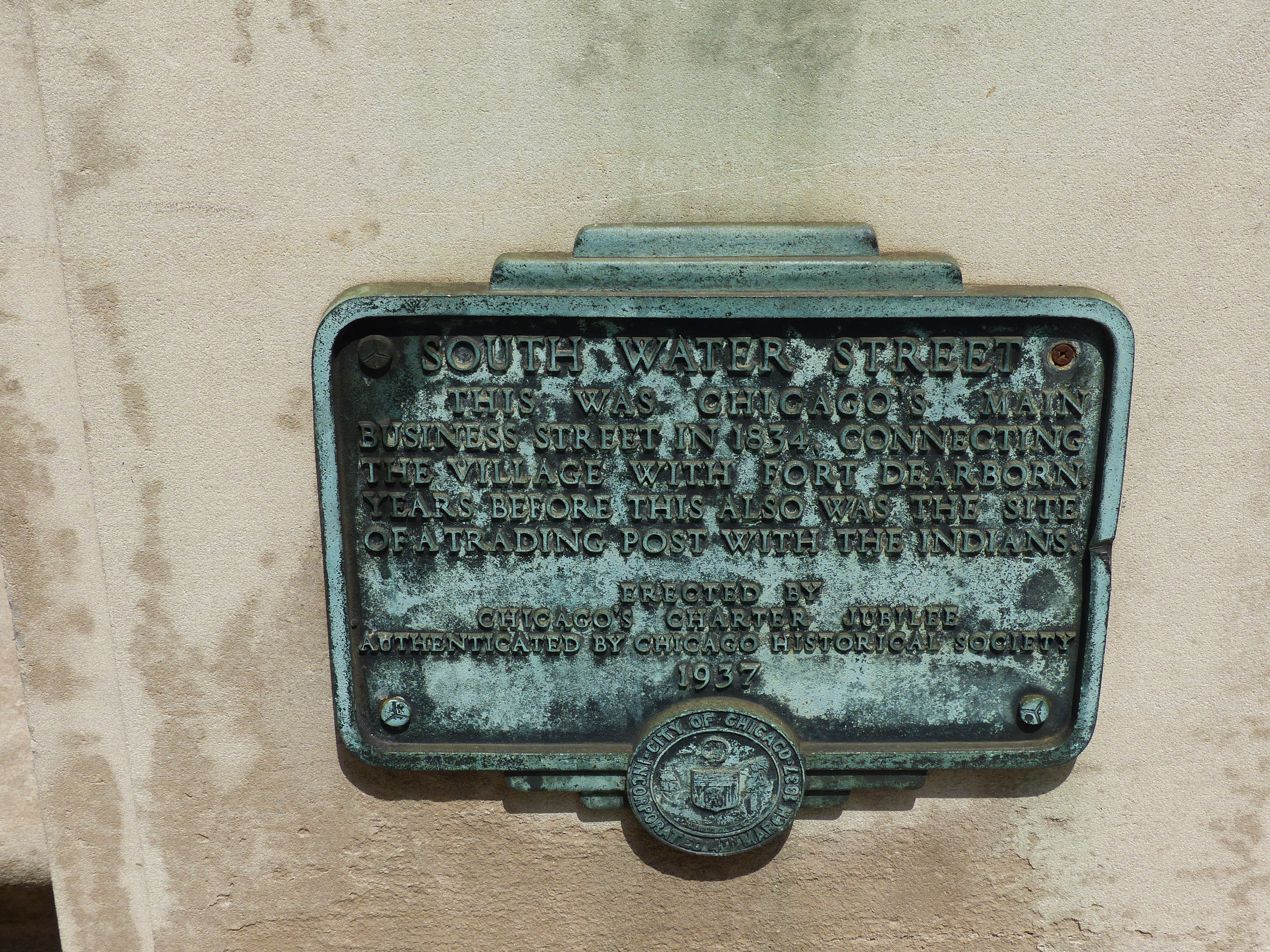
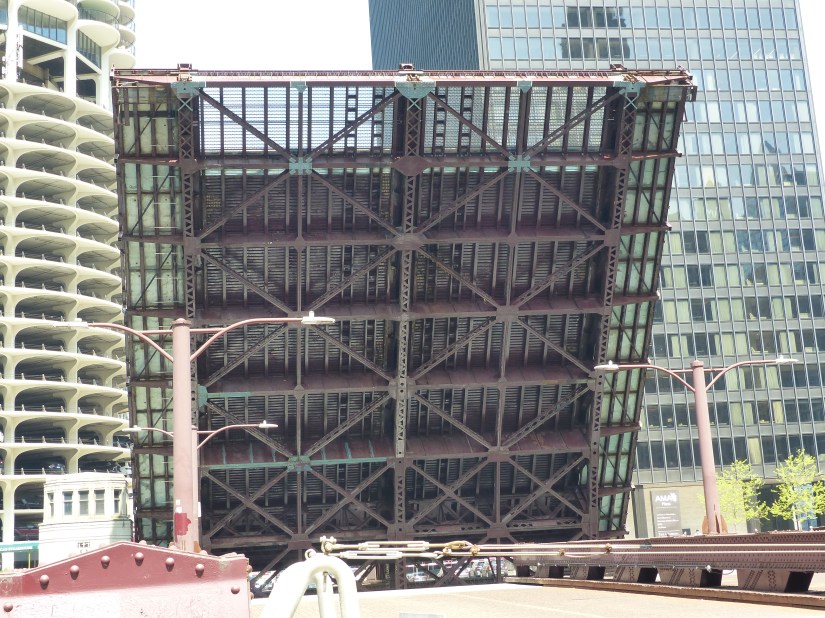
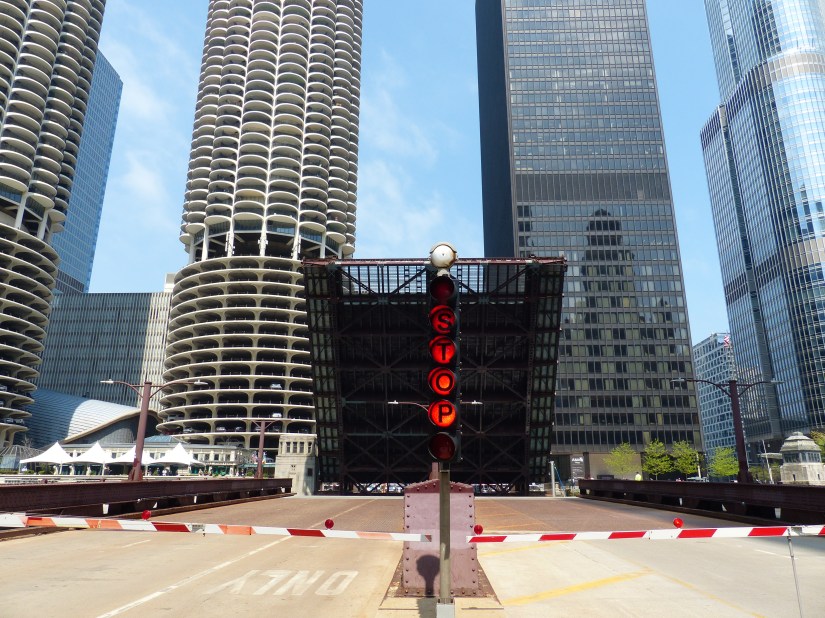
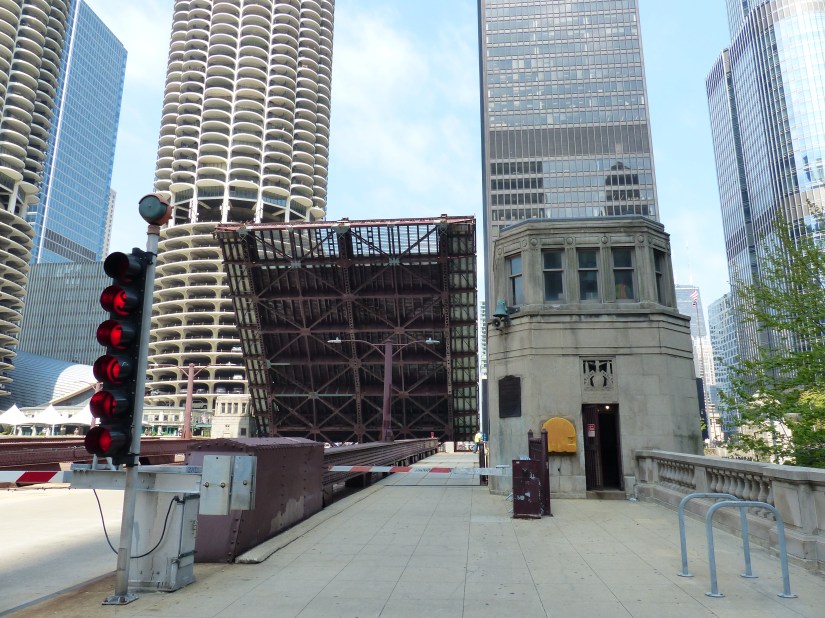
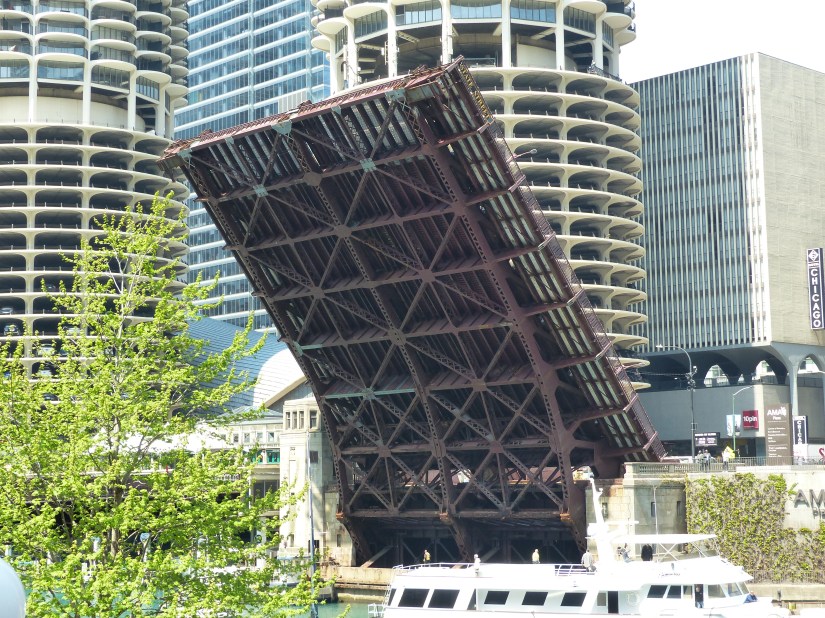
The clear span of Dearborn Street Bridge before the day’s bridge lift. At right is the bridge tender’s house, which keeps to a Mid-century, streamlined style appropriate for the bridge. Bridge style: double- leaf, single deck, deck-truss, Chicago style fixed-trunnion bascule. The design principles are minimal use of ornament, exposed structural engineering logic, and lighter leaves than the nearby ornate bridges of the 1920s.Dearborn Street Bridge viewed looking north. In the foreground is a housing for the south leaf’s trunnion mechanisms. A wing wall extends away from the north leaf across the river. Buildings in the area: Marina City, House of Blues, The Westin River North, 330 North Wabash, Museum of Broadcast Communications, and the Kinzie Hotel.Gate arms are lowered at the north leaf as crews prepare to elevate the leaves. Substructure elements visible include gusset plates, sidewalk cantilevers, and part of the abutment.Stop lights flash and bells sing as the gates are lowered at the south leaf. Bridge crews are ready in their public safety roles in the house and around the bridge at both leaves. The view looks east.The south leaf begins to rise. The view looks north-northeast.The south leaf rises, showing markings on the road deck. The east sidewalk is shown along with its gate arm.Both leaves are up as sailboats and larger boats pass under them. The view looks north and northwest. The bridge tender’s house displays its minimalist aesthetic as the foundation descends to anchor at the Riverwalk. Substructures are shown on the north leaf, including the abutment and pit for the counterweights. View is from the sidewalk along Wacker Drive. Buildings in the area: Marina City, The Westin River North, Reid-Murdoch Building, 321 North Clark, 353 North Clark, and 300 North LaSalle.The bridge tender’s house and the center point of the bridge’s leaves as they near maximum height for that day’s lift. The substructure of the north leaf displays stringers, floor beams, truss point bracing and gusset plates, and sidewalk cantilevers. Focal length: 54mm.Placed near the Dearborn Street Bridge, this plaque recalls the days when South Water Street was the main business street in 1834. The inscription reads: “This was Chicago’s main business street in 1834, connecting the village with Fort Dearborn. Years before, this was also the site of a trading post with the Indians. Erected by Chicago’s Charter Jubilee. Authenticated by Chicago Historical Society. 1937.”
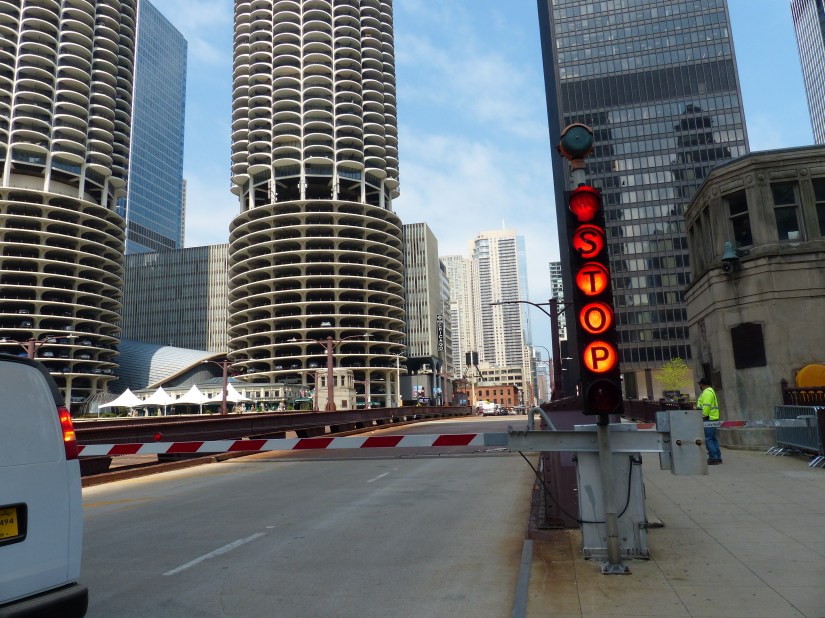
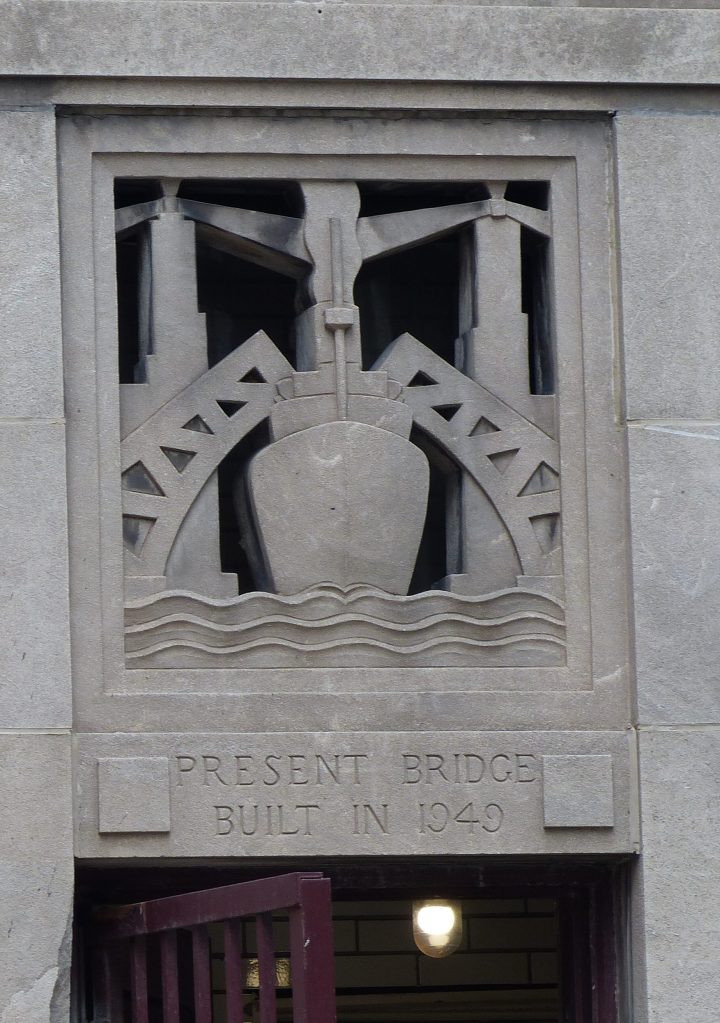
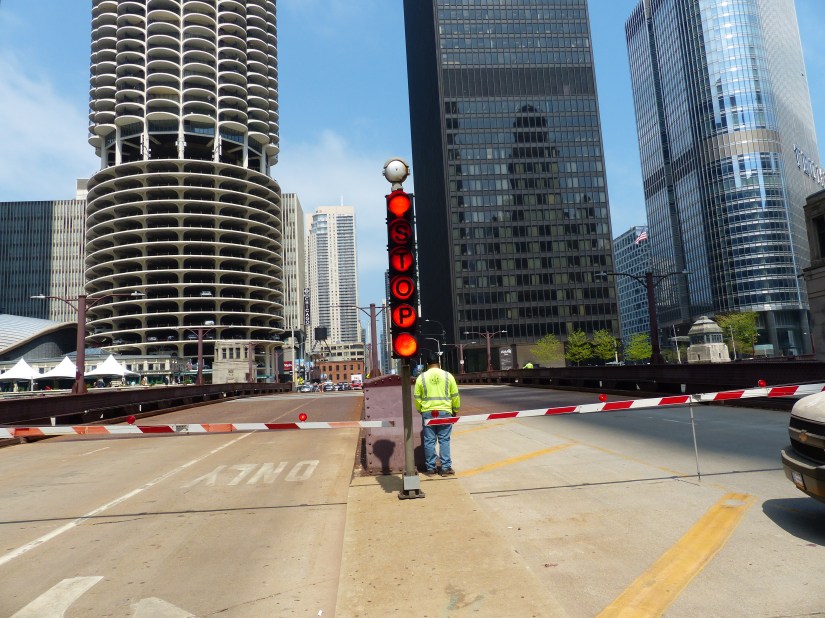
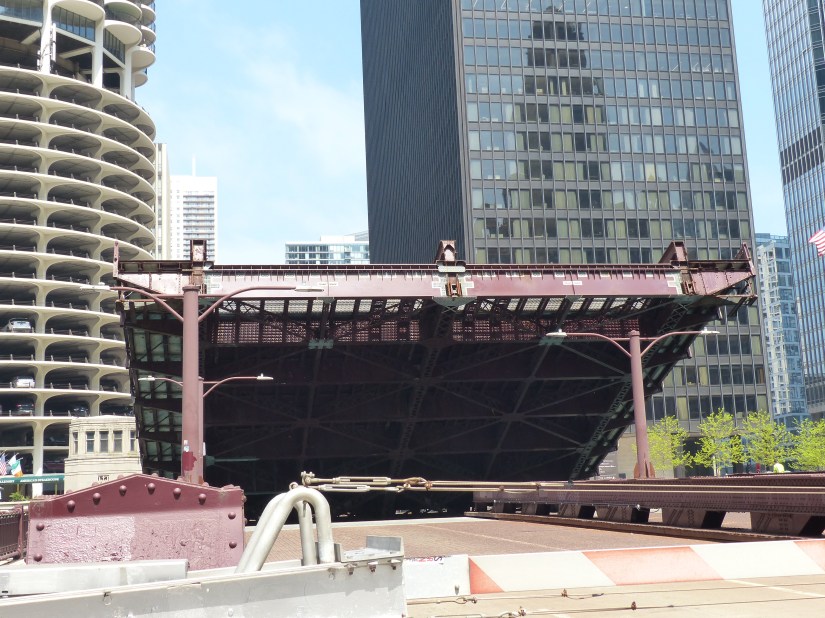
State Street Bridge: Date: construction started 1939, finished 1949 due to material shortages during World War II. Carries: vehicles and pedestrians over the Main Branch of the Chicago River.
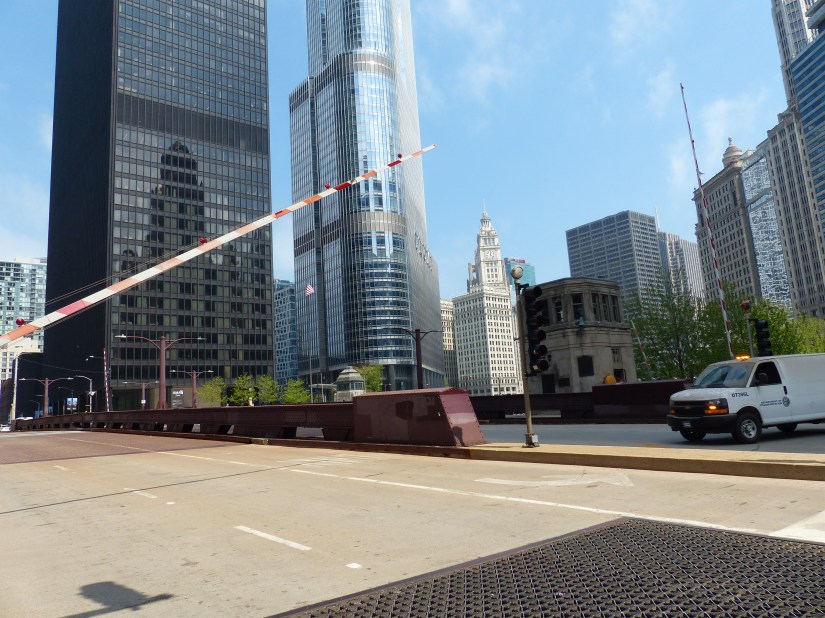
Bridge crews are ready as the gate arms lower at the south leaf. Buildings in the area include: 330 North Wabash, Wrigley Building, 401 North Michigan Avenue, 401 North Wabash Avenue, Club Quarters, Royal Sonesta, and London House, with the cupola of the original structure above the modern row at the right.Crews are ready for the bridge lift. Safety features: crew members around the bridge and in the tender’s house, flashing stop lights, warning bells, and gate arms, plus the life ring on the bridge house. View looks north.Carving of a raised bascule bridge and passing ship on gently rolling waves above the main entrance to the southeast corner bridge tender’s house. It shows the 1949 date of the building of the present bridge. The carving also shows lighthouses or building beacons and smoke rising from the ship.Warning lights and bell mast, lowered gate arms, and a watchful crew member at the south leaf wait for the lift. The view looks north from the raised median.The north leaf rises, exposing elements of the substructure. These include stringers, floor beams, and sidewalk cantilevers. The bridge’s design is a Pratt deck truss with the railing height truss variation, wherein most of the leaf members are below the road deck. The heavier, ornate bridges of the 1920s nearby display gigantic, curved gear racks with huge gusset plates and a higher Pratt pony truss variation. The view looks north.More of the north leaf’s substructure is shown as the leaf continues to rise. The view looks north and includes the northwest corner bridge house. Elements include sidewalk cantilevers, stringers, truss points with gusset plates, and floor beams. A centered view north from the median shows the flashing stop lights, lowered gate arms and elements of the leaf’s substructure. Buildings in the view include Marina City, 330 North Wabash, and the House of Blues.The raised north leaf and exposed substructure elements, warning lights and bell, and southeast bridge house with its bell and life ring. Bells on bridge tender’s houses are a traditional part of the public safety network. The view looks north along the east elevation sidewalk.The substructure of the north leaf at its maximum height is shown here. This includes the abutment and counterweight pit, and the northwest bridge house from rooftop to foundation.
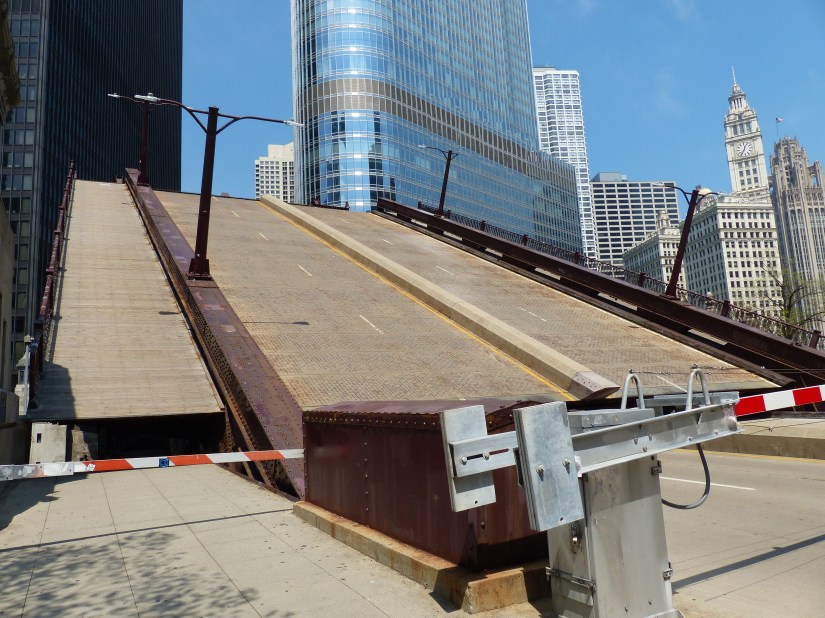
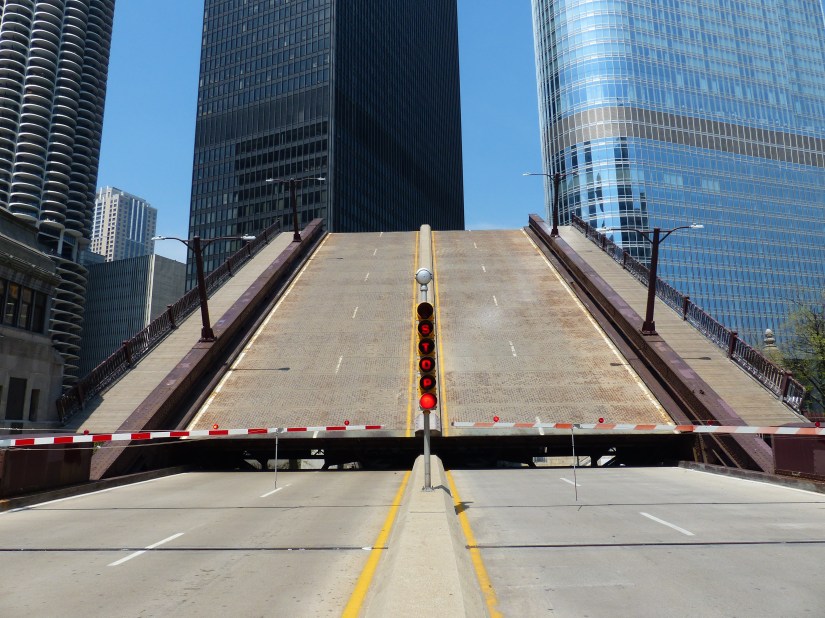
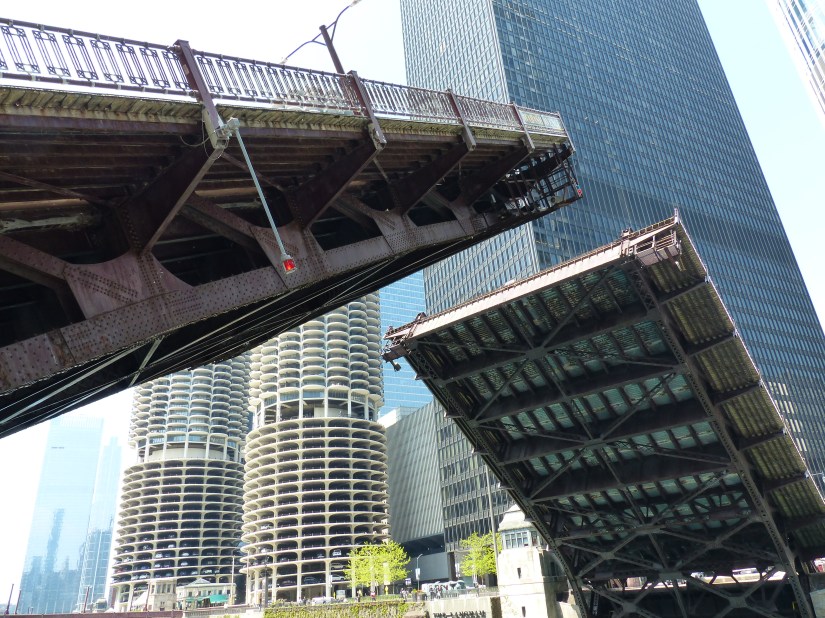
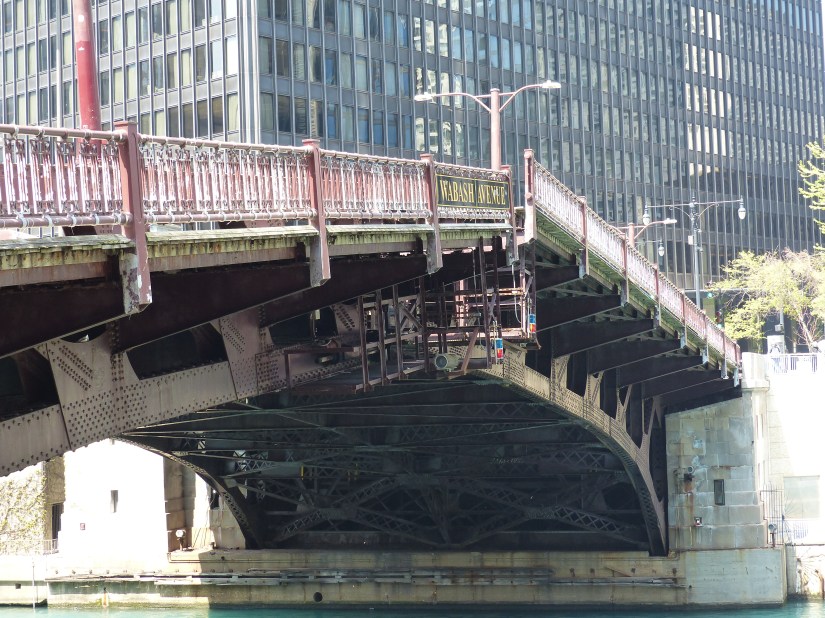
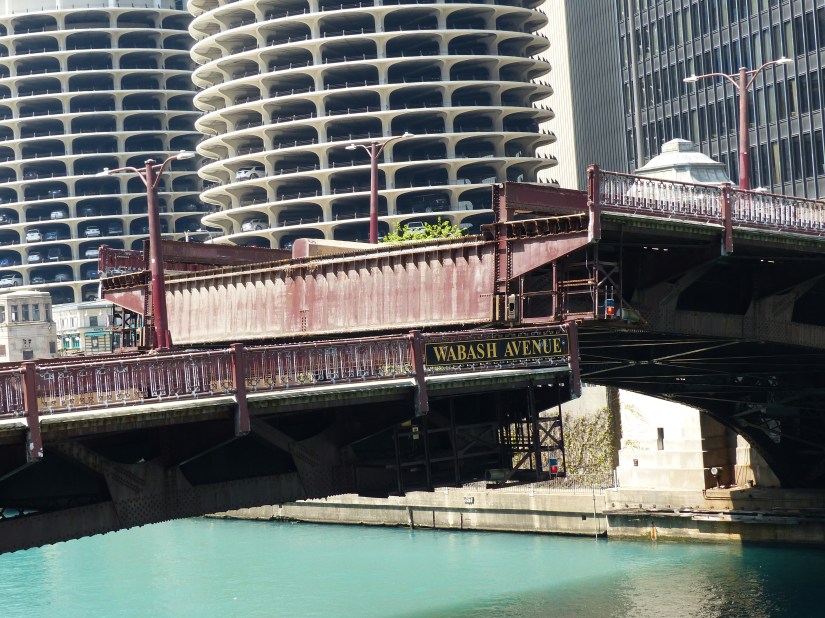
Wabash Avenue Bridge. Date: 1930. Style: Railing height Pratt deck truss. Carries: vehicles and pedestrians across the Main Branch of the Chicago River. The bridge is named for Irv Kupcinet, a Chicago Sun-Times columnist and television and radio personality.
The south leaf or Wabash Avenue Bridge rises, exposing the road deck with median, sidewalks, and streetlights. Gate arms are down- the mechanical box and counterweights for the one on the southwest corner are shown in the foreground. The bridge centered from the median, looking north as the south leaf rises. Both leaves are raised, exposing substructure members including stringers, floor beams, truss point panels, gusset plates, and sidewalk cantilevers.The leaves lower. Shown are an inspector’s catwalk near the middle of the picture, and the abutment for the north leaf.Telephoto of bridge center as the leaves lower. The rooftop and foundation of the northwest corner bridge house are at right.
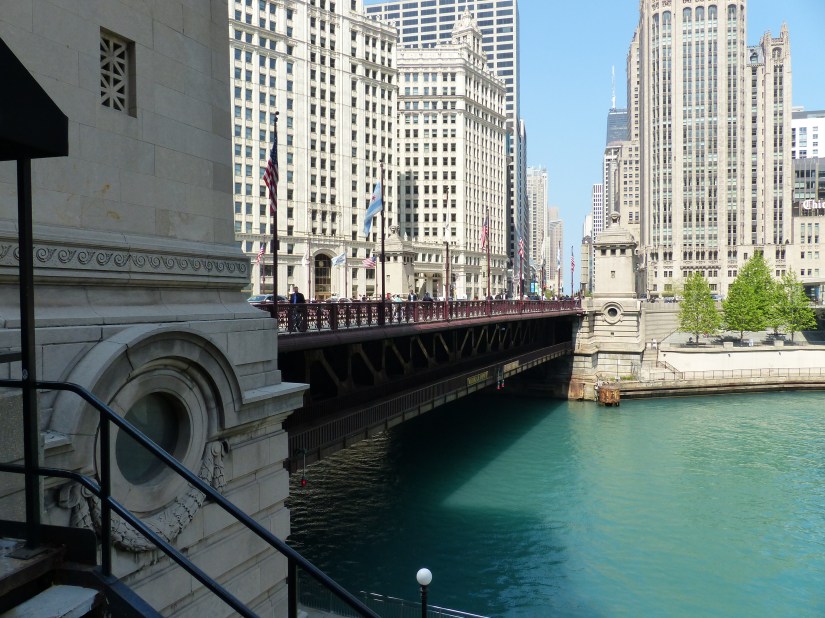
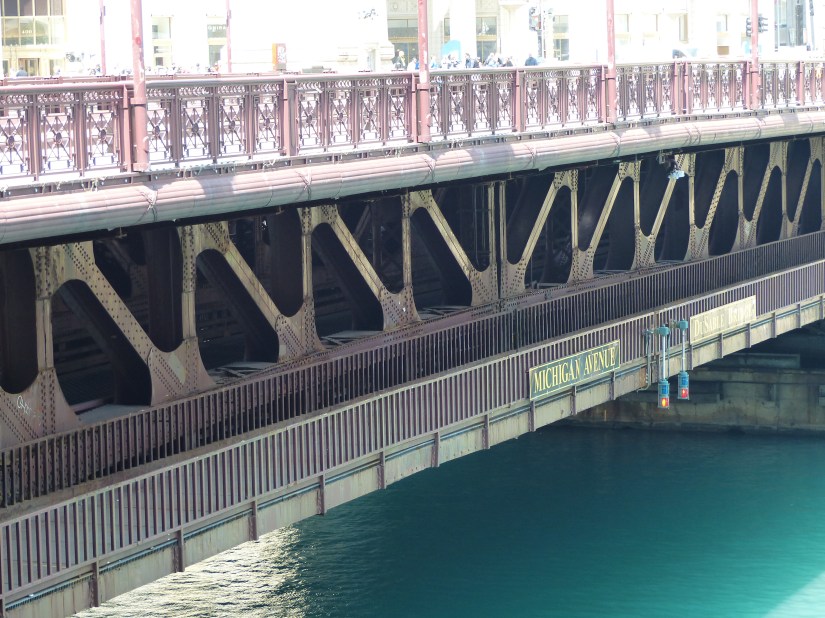
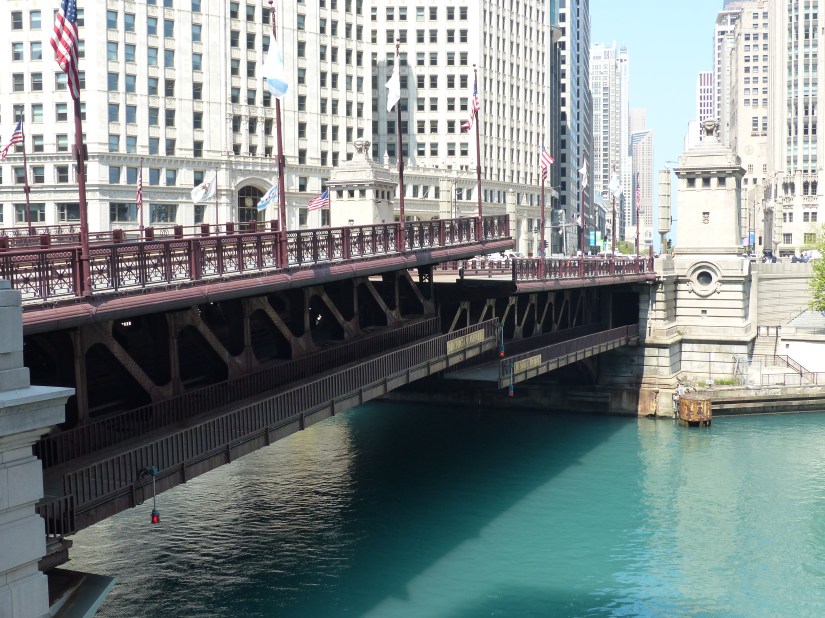
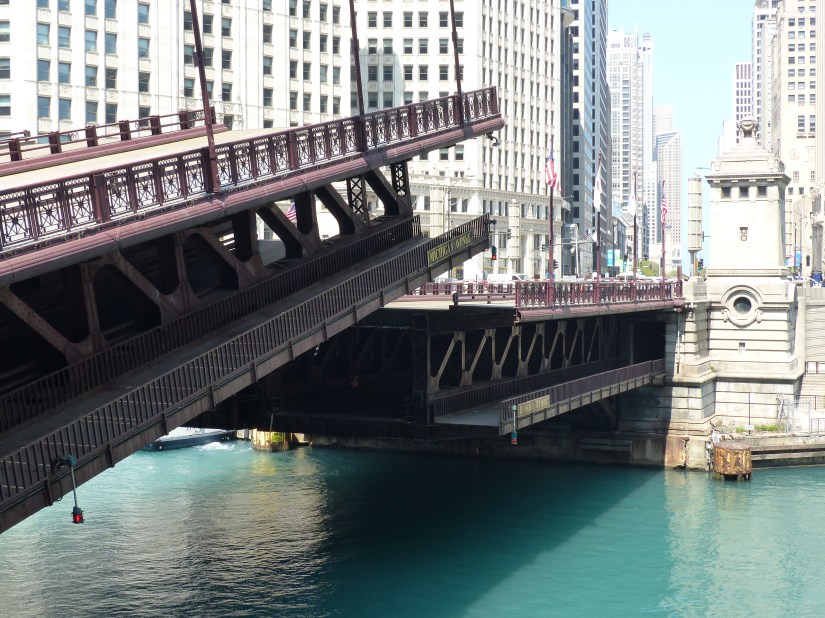
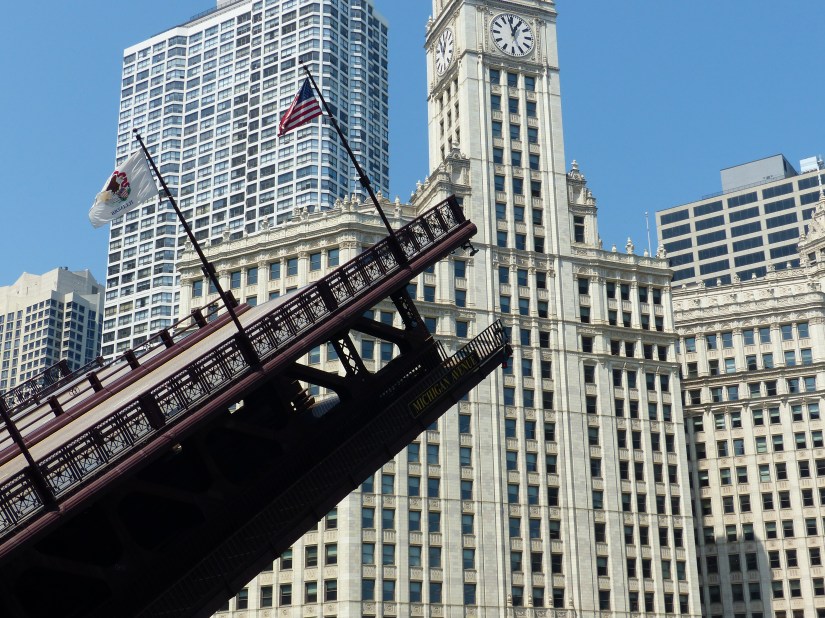
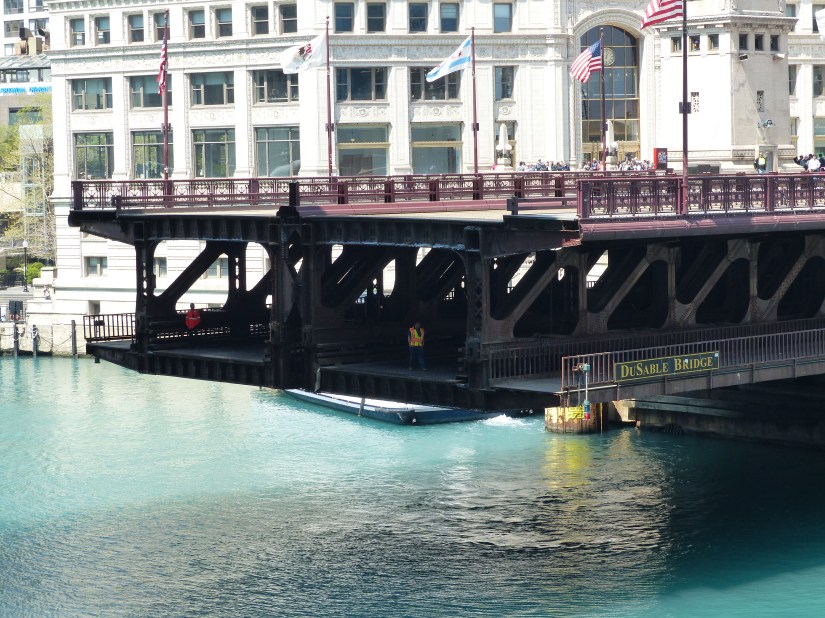
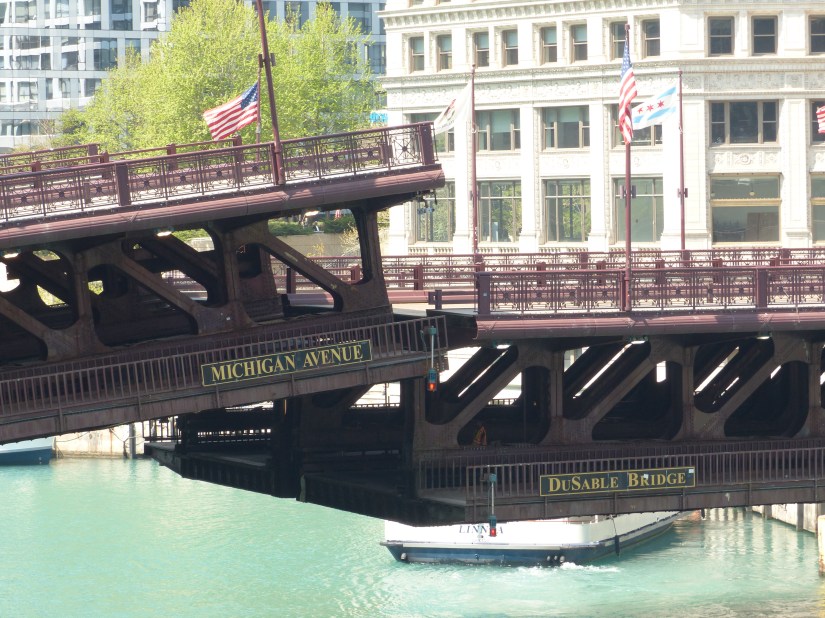
DuSable Bridge at North Michigan Avenue. Date: 1920. Design era: Structural style: Chicago-style fixed trunnion double-deck, double-leaf bascule. Carries: North Michigan Avenue over the Main Branch of the Chicago River. Named in honor of Jean Baptiste Pointe DuSable, the city’s first non-native resident, who had a homestead on land northeast of the present bridge.
The bridge viewed looking north along Wacker Drive. Buildings nearby: Tribute Tower at right, and Wrigley Building at left. The bridge is a double-leaf, double-deck, Chicago style fixed trunnion bascule in the Pratt deck truss design.The bridge has a clearance of 16 feet below it. The layout of the Chicago River made necessary the clear span design and movable spans to allow passage of watercraft too tall to go underneath if it stayed in the lowered position. Here the structural elements of the Pratt deck truss are shown near the bridge’s center. Also shown are sidewalk railings for both decks, marine lights, bridge signs, and gusset plates. Focal length: 102 mm at 35mm equivalent. The south leaf begins to rise. At right is the entire aspect of the northeast bridge house, from foundation to rooftop near where that portion of the Riverwalk begins.The center of the north leaf is exposed with its sidewalks, railings, truss panel points, and abutment.Telephoto of the raised south leaf. Background structures: Wrigley Building, River Plaza, and the R 444 North Michigan. Focal length: 54mmTelephoto of the exposed center of the north leaf. Crew members watch near its edge as part of the team effort for public safety. Focal length: 86mmThe south leaf lowers as crews ensure the locking mechanisms are properly oriented. This concludes that day’s photographic record. Telephoto length: 133 mm.
Resources
Wikipedia contributors. “Dearborn Street Bridge.” Wikipedia, The Free Encyclopedia. Wikipedia, The Free Encyclopedia, 29 Oct. 2025. Web. 23 Apr. 2026.
Wikipedia contributors. “State Street Bridge (Chicago).” Wikipedia, The Free Encyclopedia. Wikipedia, The Free Encyclopedia, 22 Apr. 2026. Web. 23 Apr. 2026.
Microsoft Copilot. “Structural Classification and Railing‑Height Pratt‑Like Truss Analysis of the State Street Bridge.” Chicago River Bridge Documentation, 23 Apr. 2026. AI‑generated explanatory text.
Microsoft Copilot. “Design Style and Modernist Engineering Principles of the Dearborn Street Bridge.” Chicago River Bridge Documentation, 23 Apr. 2026. AI‑generated explanatory text.
Wikipedia contributors. “Wabash Avenue Bridge.” Wikipedia, The Free Encyclopedia. Wikipedia, The Free Encyclopedia, 21 Jul. 2025. Web. 23 Apr. 2026.
Wikipedia contributors. “Irv Kupcinet.” Wikipedia, The Free Encyclopedia. Wikipedia, The Free Encyclopedia, 29 Nov. 2025. Web. 23 Apr. 2026.
 Frame the Works