Photos by Divi Logan. Content generated with the assistance of Copilot Smart AI.
This article includes field notes and structural observations based on observations of bridge lifts and boat runs. Bridge tender’s houses are the watchtowers and control centers for the public safety element of bridge lifts and boat runs in Chicago during the spring and fall. Notes on the design of Lake Street Bridge’s houses are included here.
🗂️ Field Notes and Structural Observations and Photographs. Superstructure and Train Deck of Lake Street Bridge.
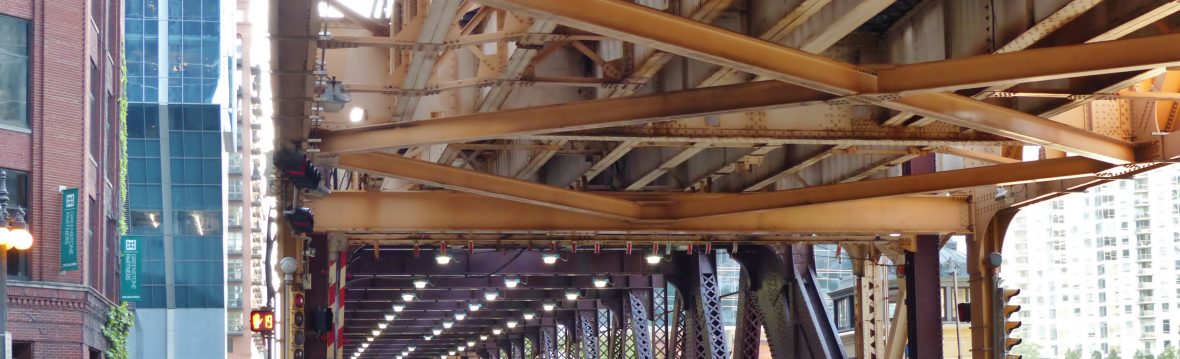
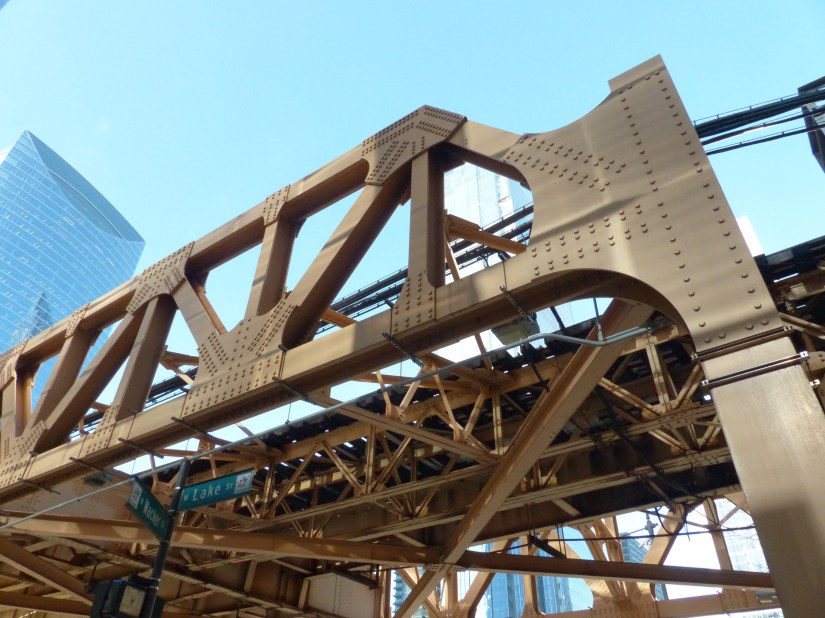
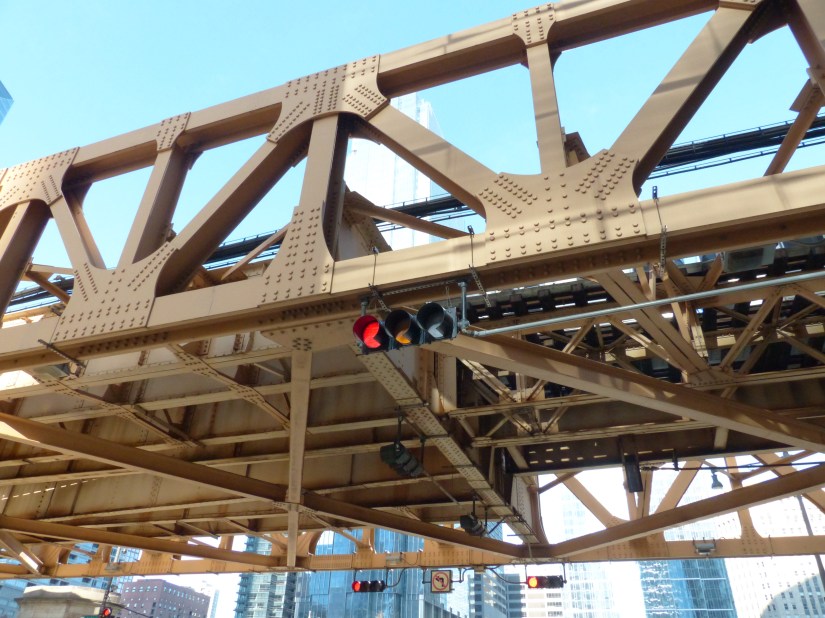
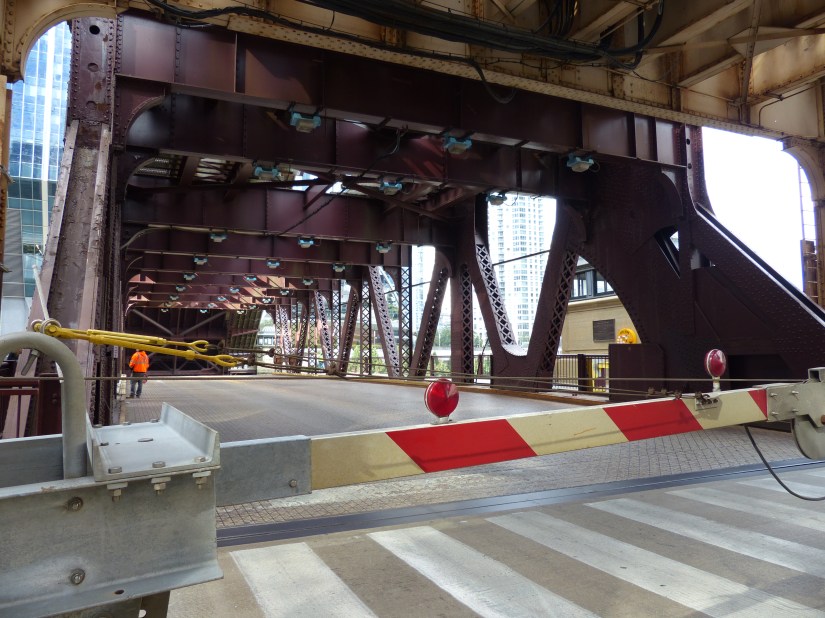
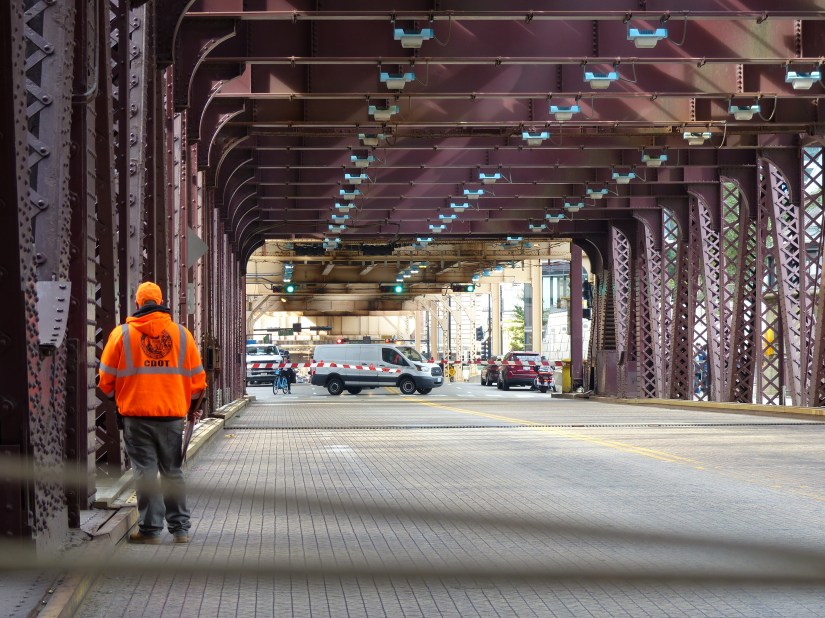
A. Photos 1 & 2 — Train Deck Approach Span (20 December 2023)
Camera: Leica
Correct Orientation:
- Photo 1: Northwest
- Photo 2: Northwest (same orientation)
Key Observations:
- Massive lateral bracing beneath CTA tracks visible in full triangulated configuration
- Riveted connections intact; no immediate deformation visible in photographed areas
- Portal frame geometry clearly expressed, knee braces structurally continuous
- Evidence of ongoing renovation staging in adjacent roadway environment
- Strong visibility of load‑path hierarchy: diagonal bracing → portal frame → main truss
Engineering Relevance:
- Useful for assessing current bracing condition during renovation
- Provides visual confirmation of bracing alignment and rivet pattern continuity
- Supports comparison with pre‑renovation imagery (2019)
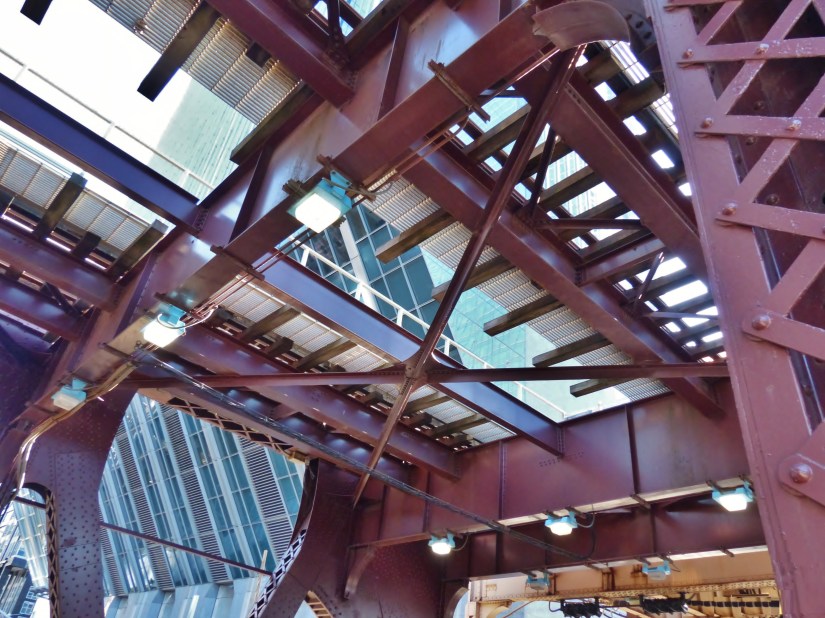
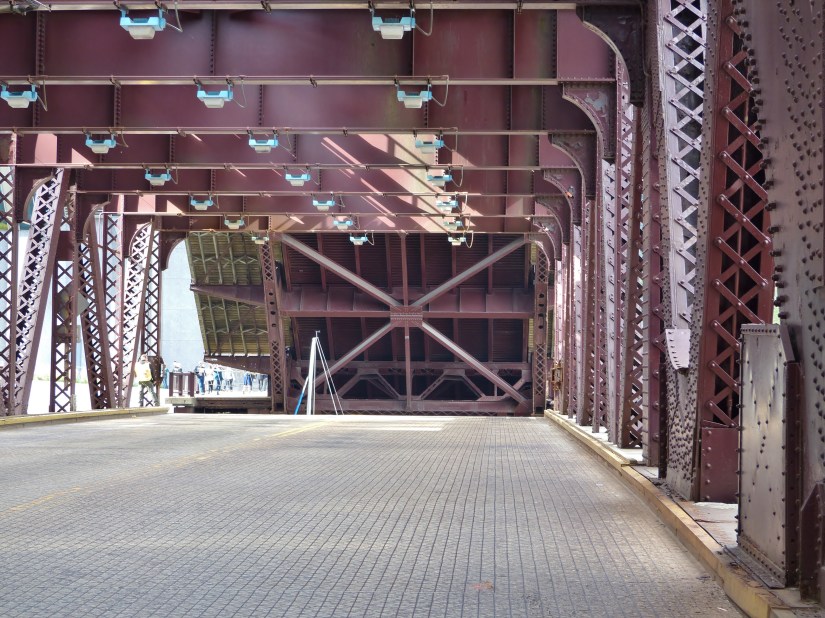
B. Photo 3 — Clear‑Span Train Deck Lateral Bracing (4 May 2019)
Camera: Leica
Digital Focal Length: 25 mm
Orientation: Southwest, with 150 North Riverside clearly visible in the background
Key Observations:
- Under‑deck lateral bracing system visible without obstruction
- Triangulated members show clean geometry and consistent rivet spacing
- Lighting fixtures and grating above provide context for deck thickness and spacing
- No renovation equipment present (pre‑renovation baseline)
Engineering Relevance:
- Establishes pre‑renovation baseline for clear‑span bracing
- Useful for comparing rivet condition, member alignment, and bracing continuity
- Supports long‑term structural monitoring
Field Notes of Structural Exposure During Boat Run
Lake Street Bridge — West Leaf
19 October 2019 — Cool, Sunny Conditions
Time span of the photographs: 11:09 AM to 11:23 AM.
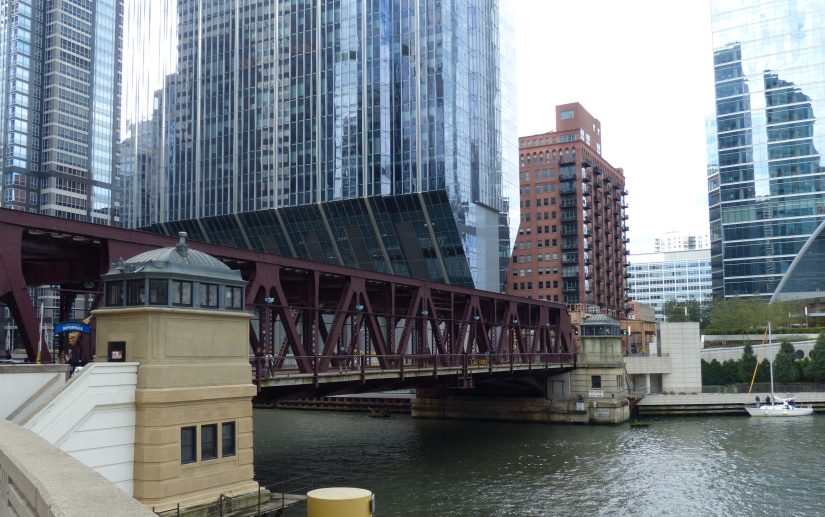
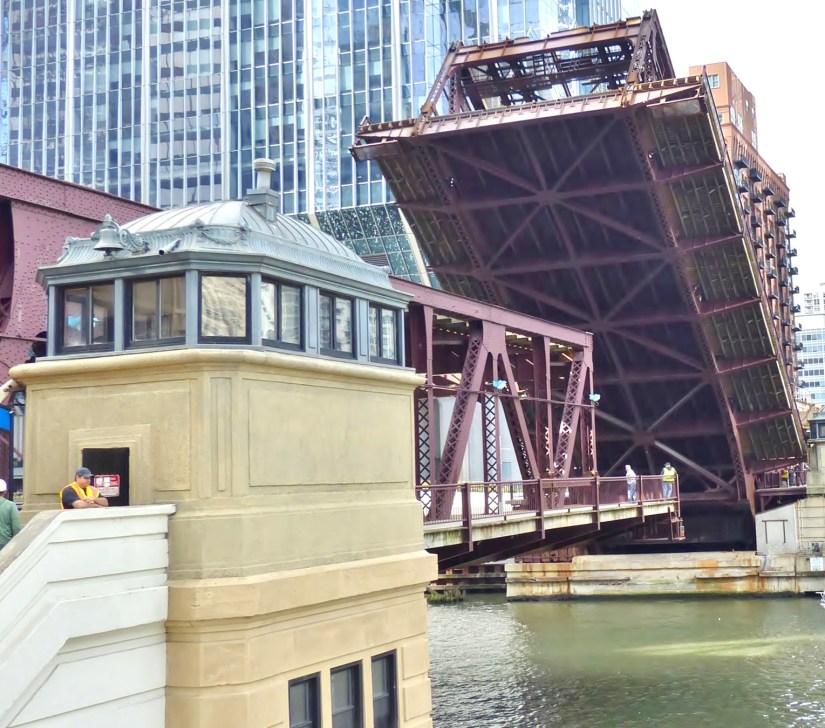
Observer Position for Photo 1: Southeast corner of W. Lake St. & W. Wacker Dr.
Camera: Telephoto at 102 mm (35mm equivalent)
Weather: Cool, sunny; coats and heavy jackets required for crew and observers
During this boat run, the west leaf of the Lake Street Bridge lifted high enough to expose a rare, comprehensive view of the floor system, truss connections, and superstructure bracing. The southeast‑corner vantage point provides a clean, diagonal look under the leaf, while the telephoto focal length compresses the structural grid into a readable, engineering‑useful frame.
1. Floor System Components Documented
Stringers (Longitudinal)
- Running in the direction of traffic
- First receivers of wheel loads
- Deliver loads into the transverse floor beams
- Spacing and continuity are sharply defined in Photo 1
Floor beams (Transverse)
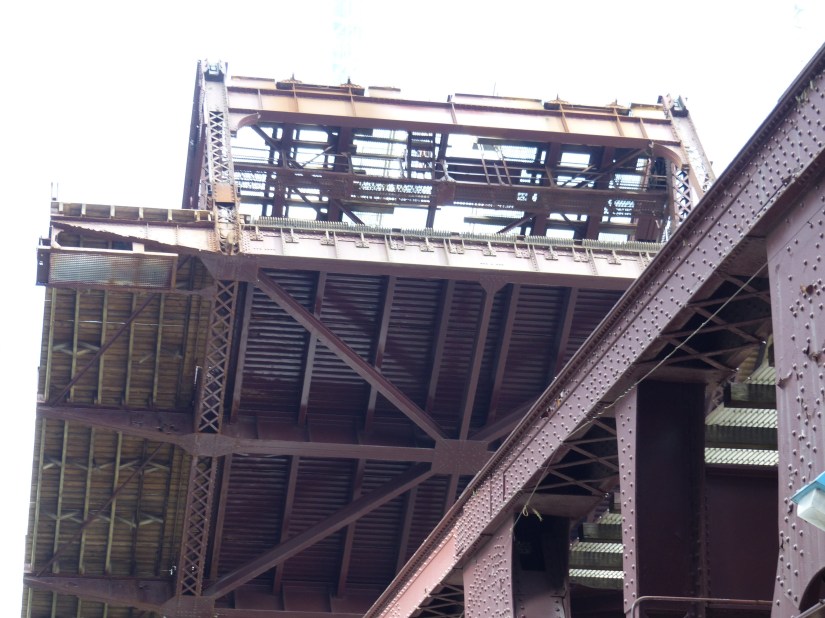
- Collect load from multiple stringers
- Frame directly into truss panel points
- Riveted connections and beam depth are clearly visible from this angle
Truss Panel Points
- Nodes where floor beams meet the truss
- Gusset plates, rivet fields, and diagonal members are legible
- The load path is unusually easy to trace from deck to truss
Train Deck Floor beams
- Secondary transverse members supporting the lower rail deck
- Riveted construction and alignment visible beneath the roadway deck
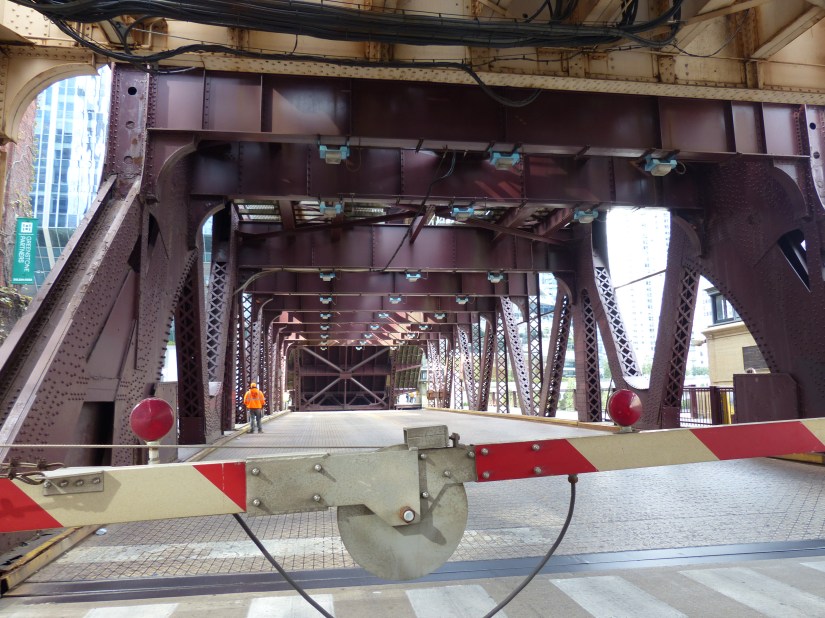
2. Superstructure Bracing and Secondary Members
X‑Bracing
- Provides lateral stiffness
- Prevents racking during leaf rotation
- Geometry is clearly captured in both photos
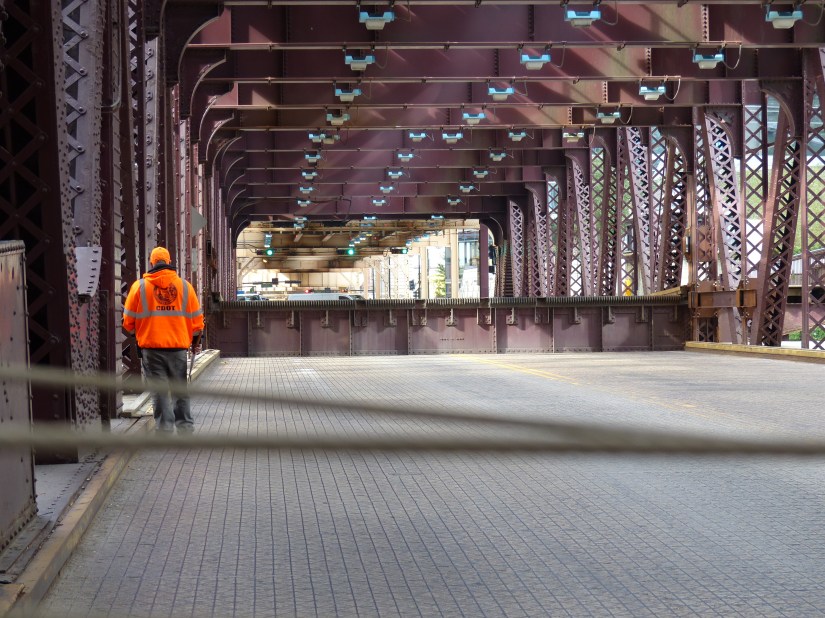
Intermediate Bracing
- Smaller diagonals and transverse members tying the floor system together
- Visible between stringers and floor beams
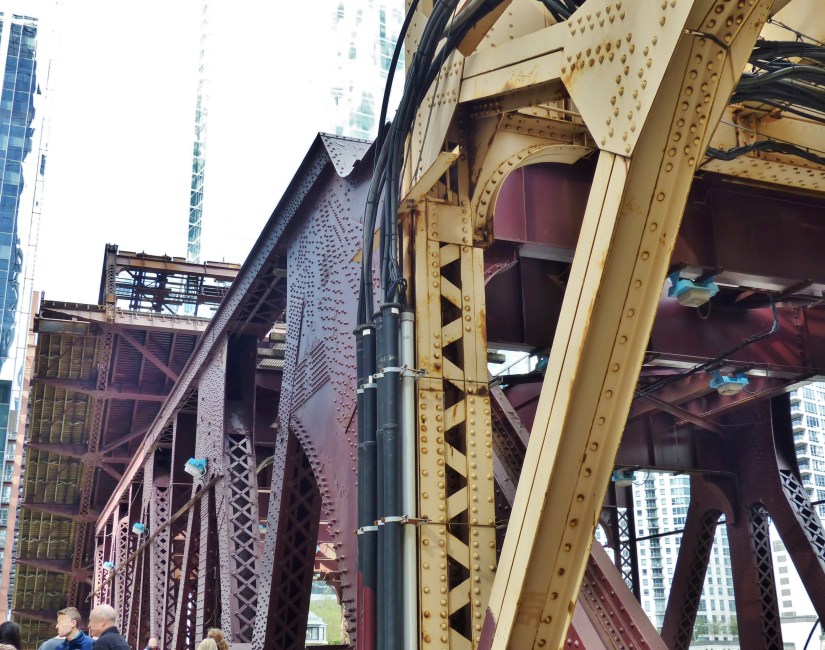
Gusset Plates
- Riveted connection plates at panel points
- Edge geometry and rivet patterns are well‑lit and readable
Inspector’s Catwalk
- Running along the truss
- Brackets, railing, and attachment points visible
- Useful for maintenance and safety review
Sidewalk Cantilevers
- Underside of the pedestrian walkway exposed
- Cantilever brackets and stiffeners visible due to the raised leaf angle
3. Operational Context: CDOT Crew Oversight
Photo 2 includes a bridge crew member in a bright orange “CDOT – BRIDGES” heavy jacket observing the descending leaf.
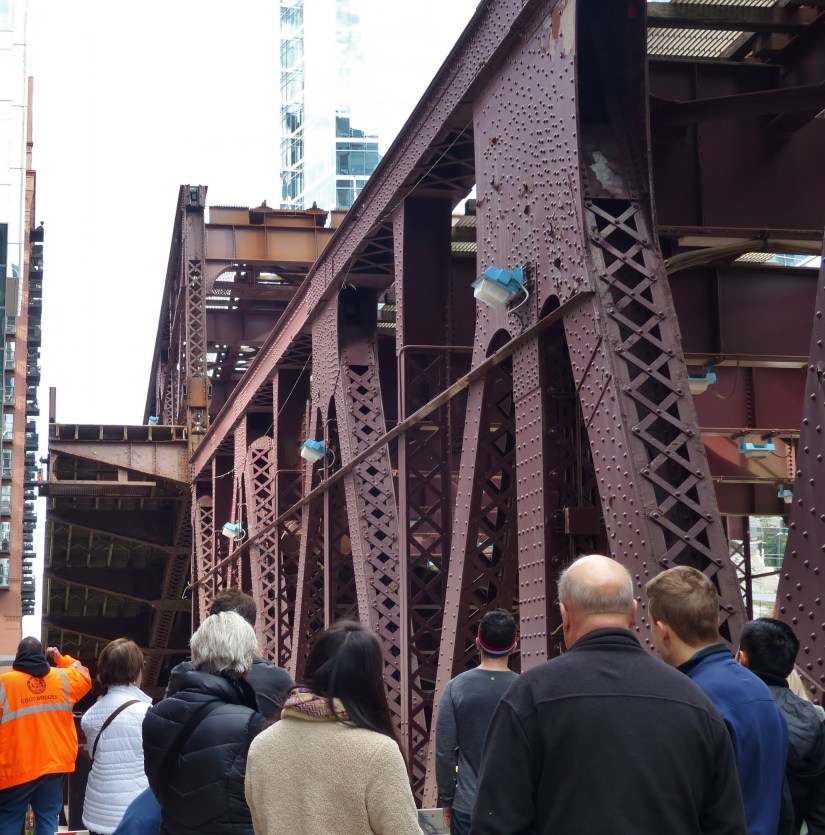
This documents:
- Crew positioning during descent
- Required line‑of‑sight for safe operation
- Cold‑weather gear typical for fall operations
- Human‑machine interaction during movable‑bridge activity
The presence of the crew member adds operational value to the structural record.
4. Engineering and Training Value of the Photo Set
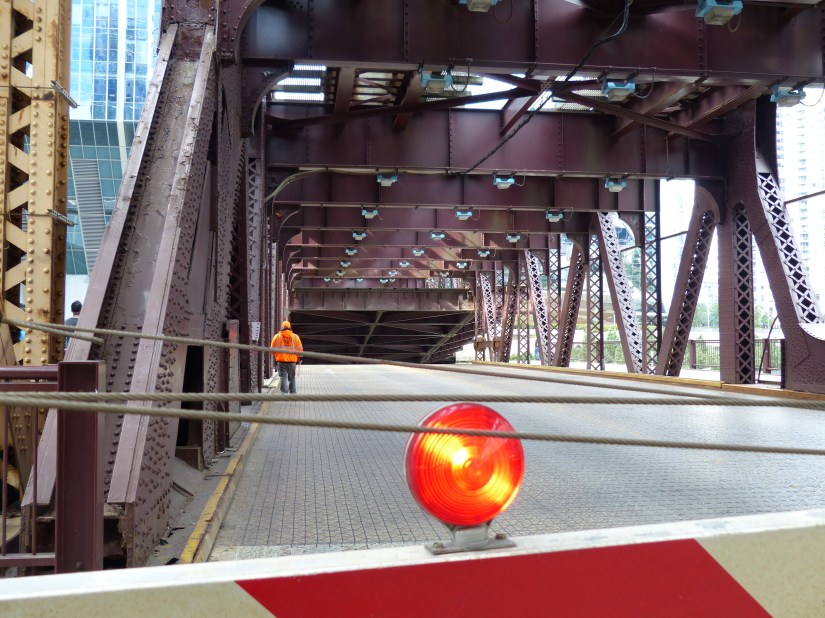
These two images collectively capture:
- A complete floor system hierarchy (stringers → floor beams → truss panel points)
- Bracing logic (X‑bracing + intermediate bracing)
- Connection details (rivets, gusset plates, stiffeners)
- Operational oversight by CDOT personnel
- Environmental conditions relevant to fall operations
This makes the set suitable for:
- Engineering review
- Renovation planning
- Crew training
- Structural documentation
- Public‑facing infrastructure education
Notes About the Design of the Bridge Tender’s Houses.
Bridge houses need a 360-degree view of the surrounding landscape, streets, waterways, and all parts of the bridge to ensure public safety during boat runs or construction ventures.
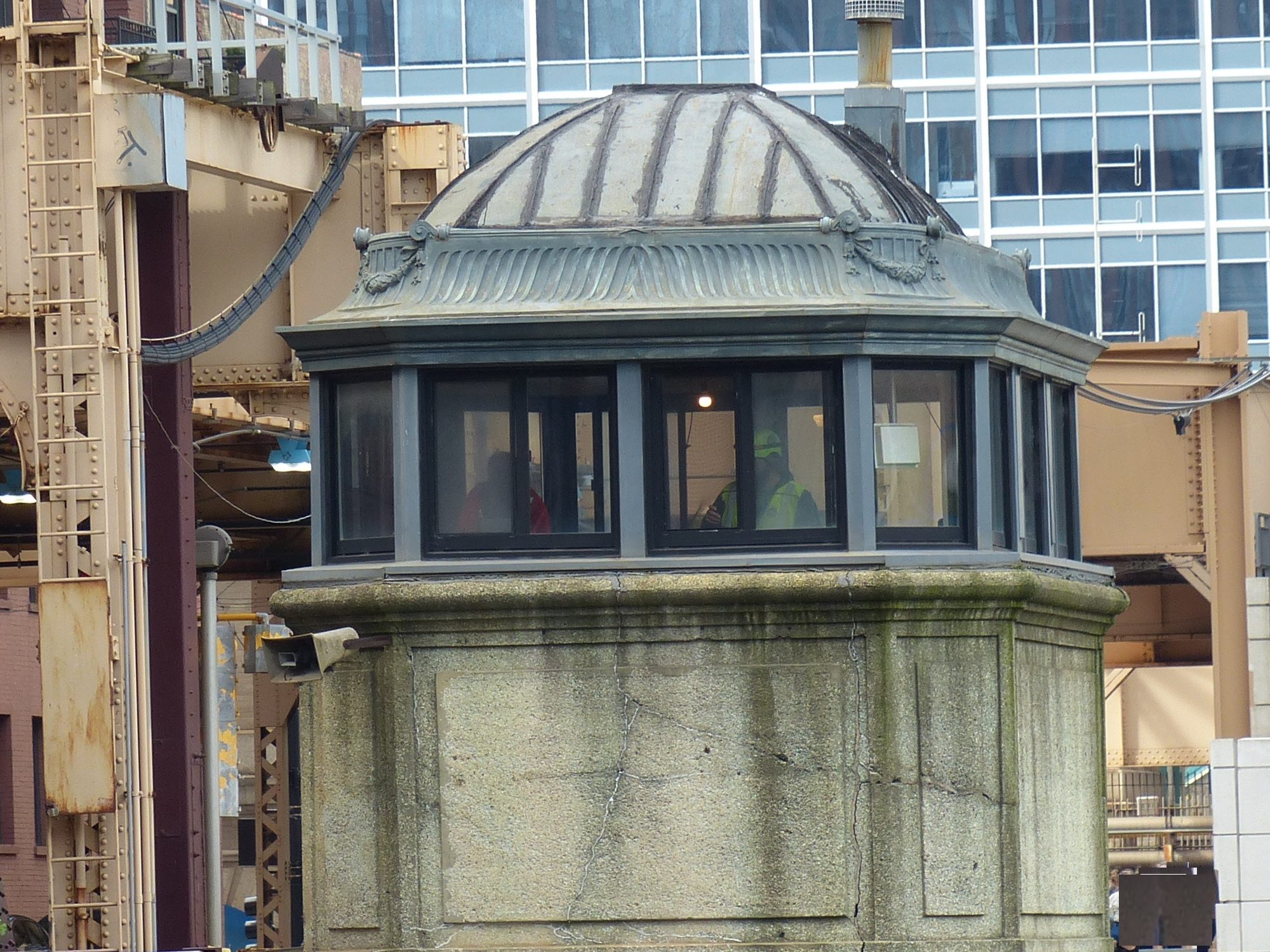
GLOSSARY ENTRIES — Fenestration & Related Terms Descriptive of Elements of the Bridge Tender’s Houses
Fenestration
The arrangement, design, and construction of windows in a building or structure. In movable‑bridge architecture, fenestration often reflects operational needs, prioritizing visibility for bridge tenders over stylistic expression.
Steel‑Sash Window
A window in which the frame and operable components are made of steel. Common in early‑20th‑century industrial and municipal buildings, steel sash allows for large, unobstructed panes and durable operation in harsh environments such as riverfront infrastructure.
Muntin
A strip of wood, metal, or plastic that separates and holds individual panes of glass within a window. Traditional muntins create a multi‑light appearance. The Lake Street Bridge tender’s houses do not use muntins; their windows are single‑pane steel sash.
Single‑Light Window
A window composed of one continuous pane of glass. This is the configuration used in the Lake Street Bridge tender’s houses, providing maximum visibility for bridge operations.
Reflectivity (Glazing Behavior)
The tendency of large, flat panes of glass to mirror surrounding structures depending on light angle and sky conditions. In bridge house photography, reflections of nearby towers often dominate the appearance of the windows.
Resources
- Microsoft Copilot. “Field Notes Appendix — Orientation Corrections (Updated).”
Field Notes and Photographs of Lake Street Bridge in Chicago, 26 Mar. 2026.
AI‑generated explanatory text. - Microsoft Copilot. “What Road‑Deck Stringers Do on a Bascule Bridge.” Field Notes and Photographs of Lake Street Bridge in Chicago, 26 Mar. 2026. AI‑generated explanatory text.
- Microsoft Copilot. “Sidebar: What the Road‑Deck Stringers Actually Do.” Field Notes and Photographs of Lake Street Bridge in Chicago, 26 Mar. 2026. AI‑generated explanatory text.
- Microsoft Copilot. “Floor System Hierarchy: How Loads Move Through a Bascule Leaf.” Field Notes and Photographs of Lake Street Bridge in Chicago, 26 Mar. 2026. AI‑generated explanatory text.
- Microsoft Copilot. “Field Notes Appendix — Structural Exposure During Boat Run (19 October 2019
- Field Notes and Photographs of Lake Street Bridge in Chicago, 26 Mar. 2026. AI‑generated explanatory text.
- Copilot. Fenestration & Related Terms Glossary. Microsoft, 28 Mar. 2026.
 Frame the Works