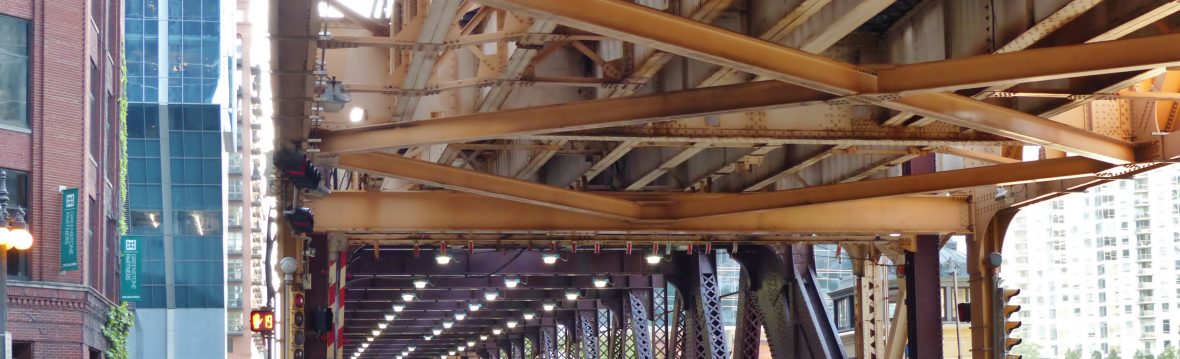
My article includes something special: A kid‑friendly guide for new railfans watching trains on busy main lines.
Article and photographs by Divi Logan
Railroad service has its ups and downs just like any other specialized industry. As a railfan, I take it all in- the weather, the stations, the environment, and the personnel who work hard to maintain every aspect of our supply chain. When I am out and about along the rails, the question always comes to mind, “What moves you?”
The Language of Dispatchers: Meets and Passes on a Triple-track System
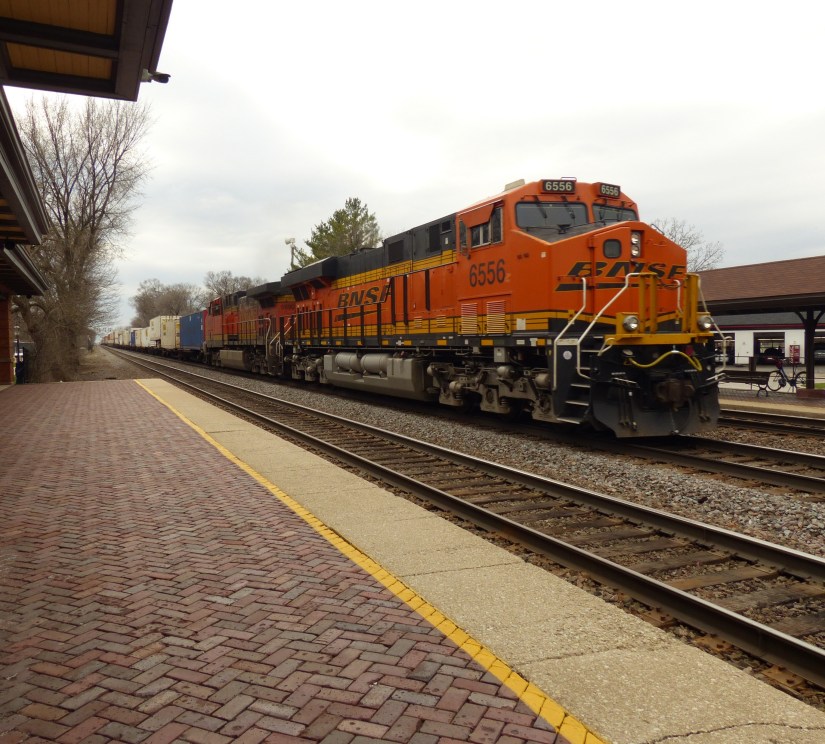
METRA and BNSF Pass Sequence. Riverside, Illinois. 12 April 2022.
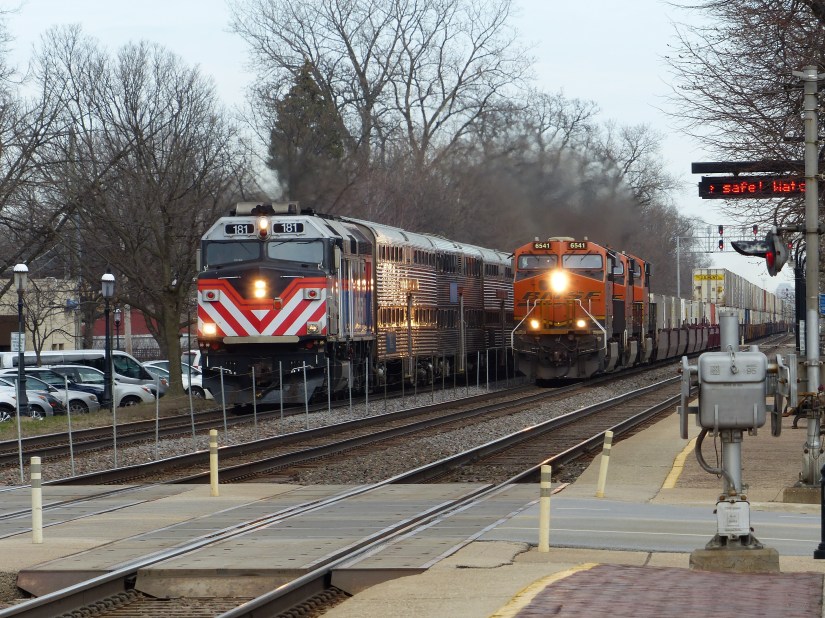
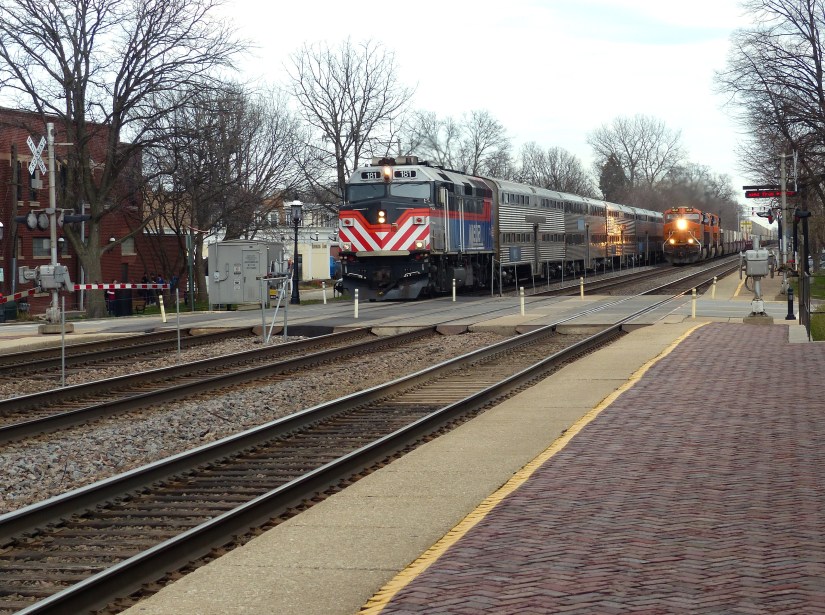
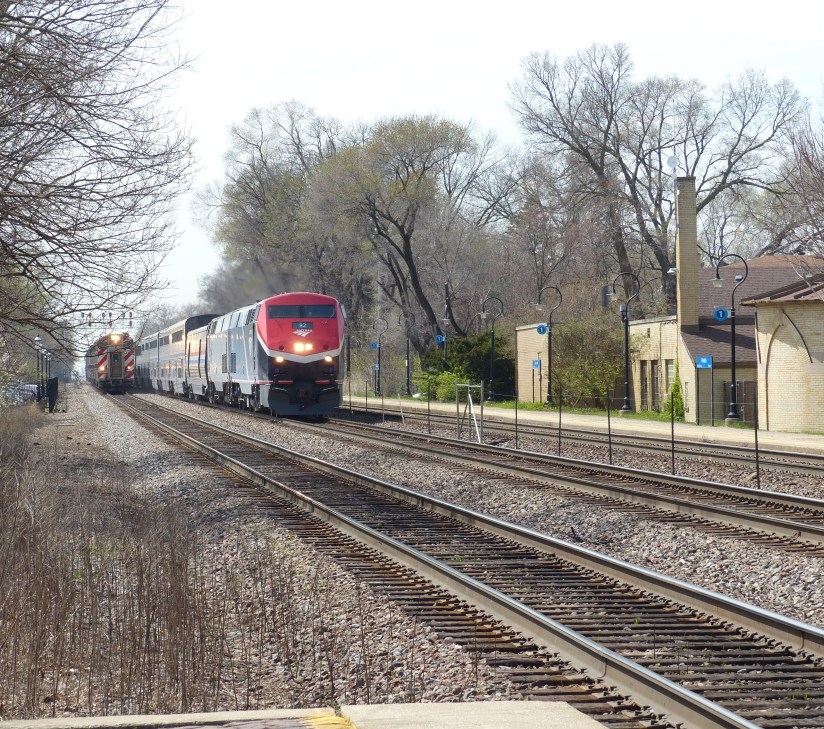
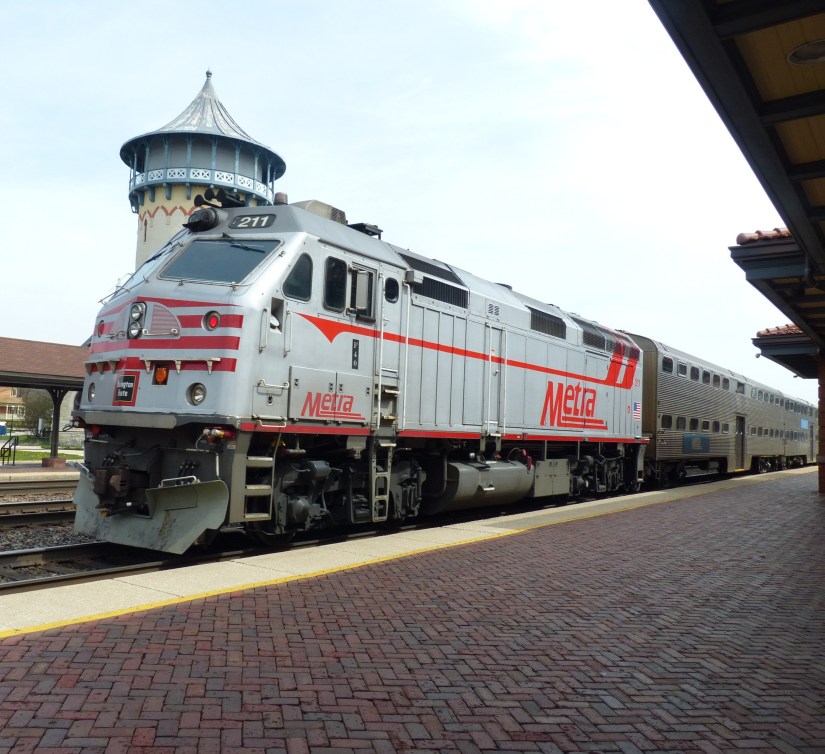
METRA and AMTRAK Pass Sequence. 10 April 2024.
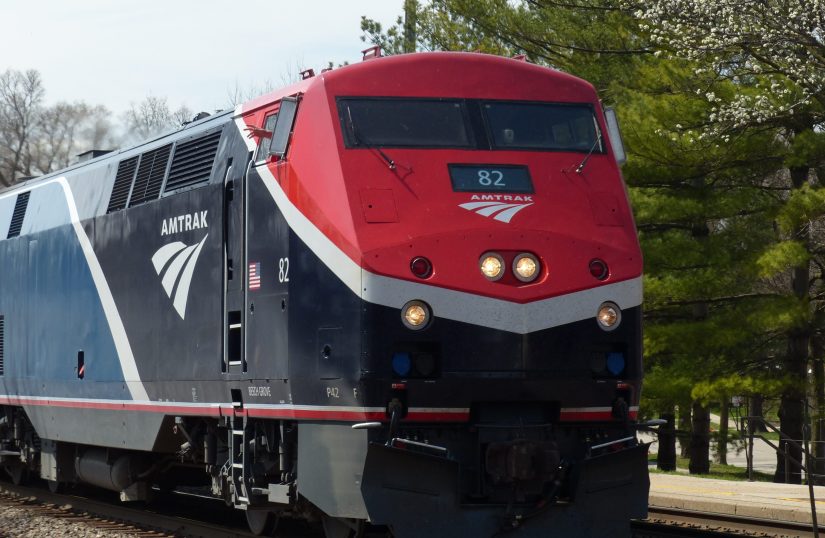
AMTRAK #82 — Telephoto Compression & Focal Length
The telephoto frame of AMTRAK P42DC #82 was captured at a 35 mm‑equivalent focal length of 107 mm, placing it in the moderate‑telephoto range. This focal length:
Introduces gentle compression, pulling the locomotive and spring foliage into a tighter visual plane
Preserves environmental context, avoiding the extreme flattening seen in long‑reach railfan telephotos
Enhances the sense of forward motion, especially with the locomotive centered and the track curvature subtly emphasized
Produces a natural yet intentional railfan perspective — ideal for documenting locomotive detail without losing corridor identity.
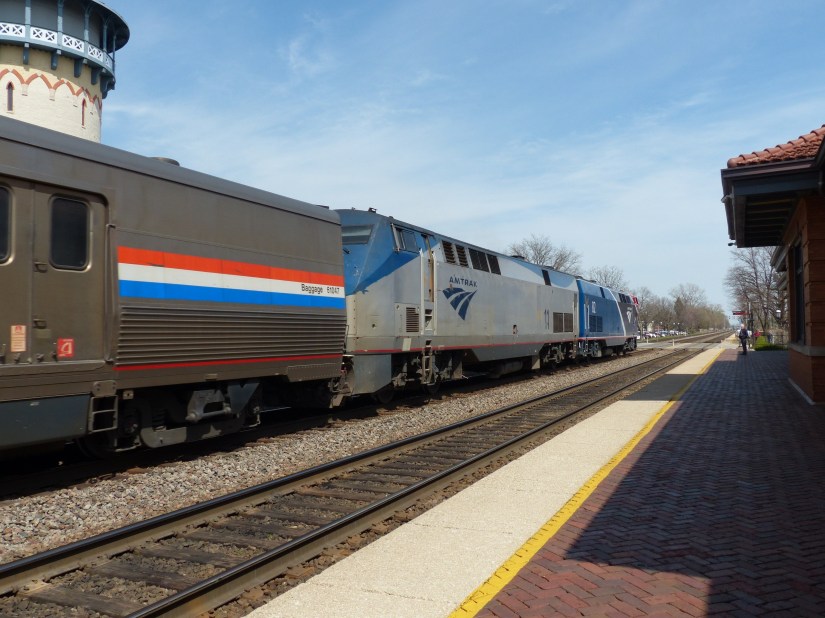
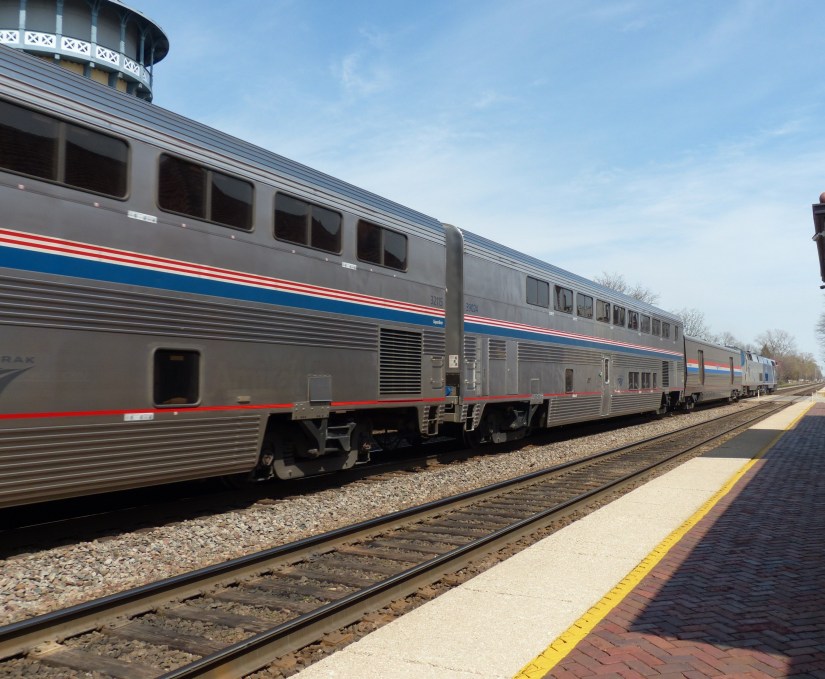
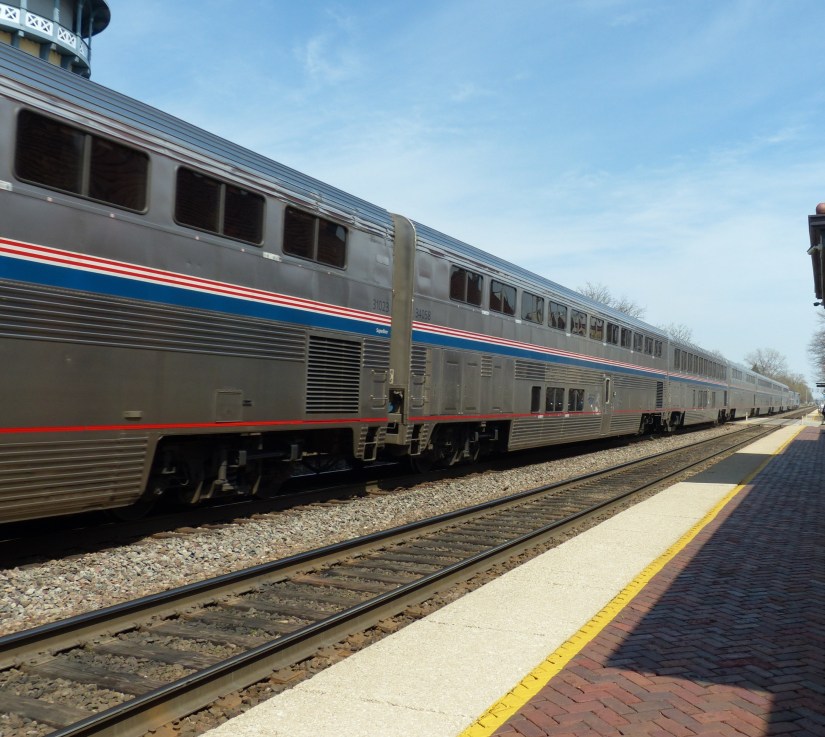
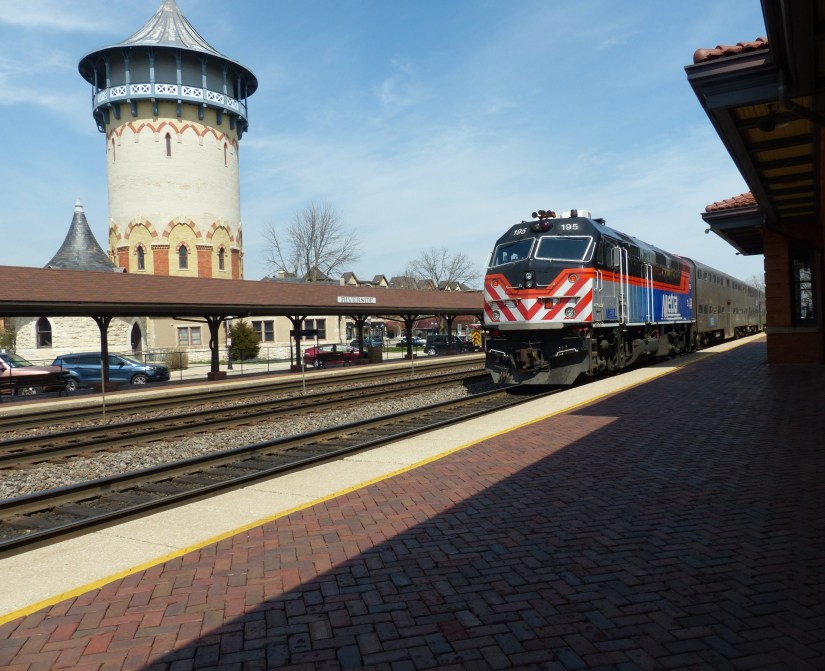
METRA and BNSF Meet Sequence. Riverside, Illinois. 10 April 2024. Featuring METX #211 and BNSF #3680.
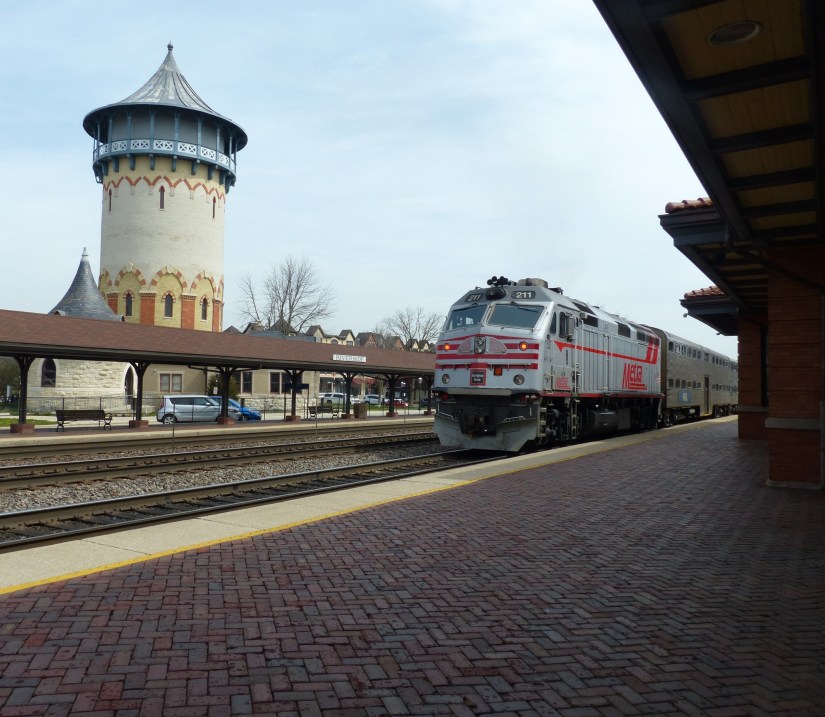
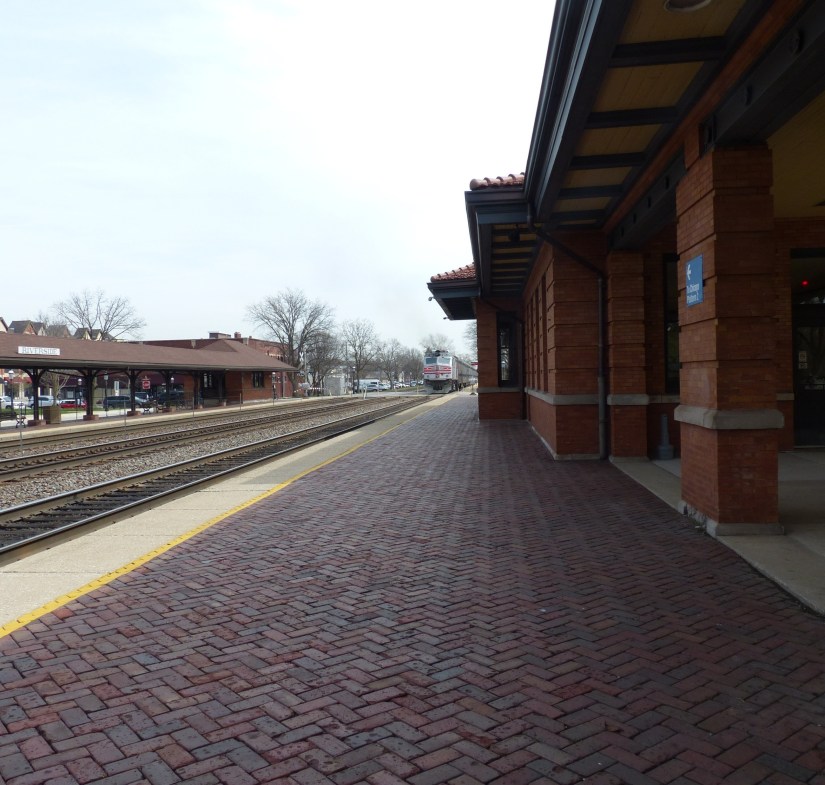
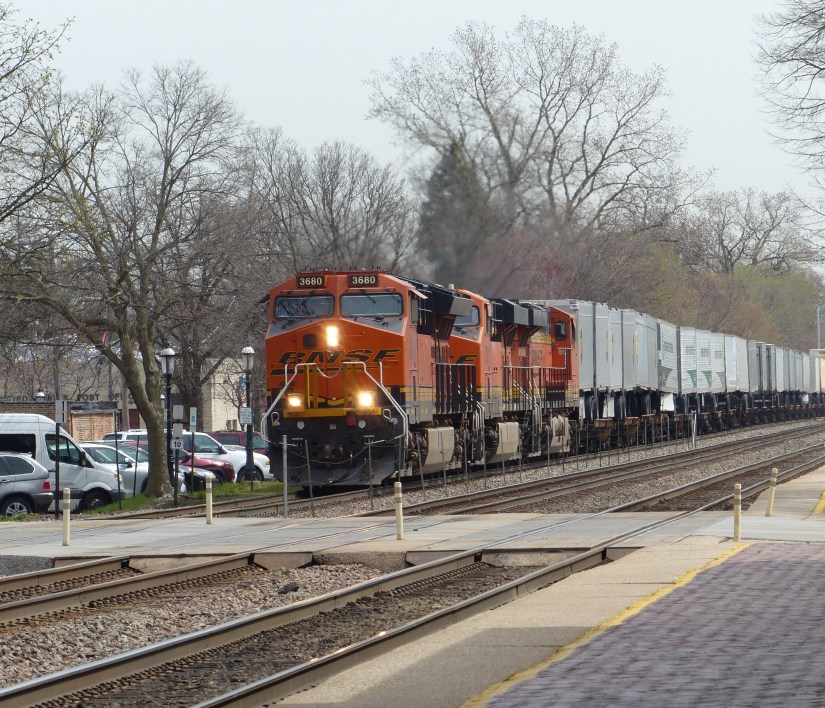
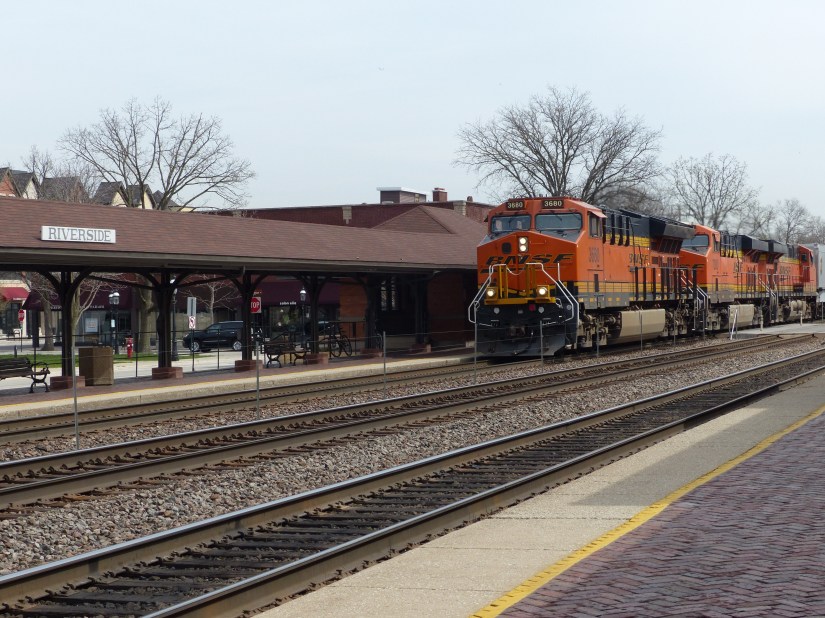
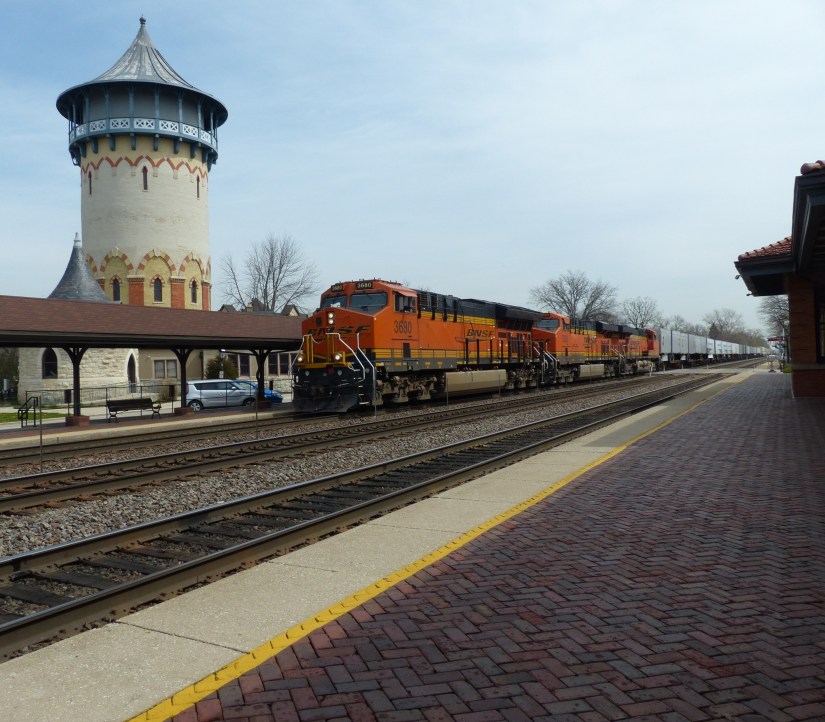
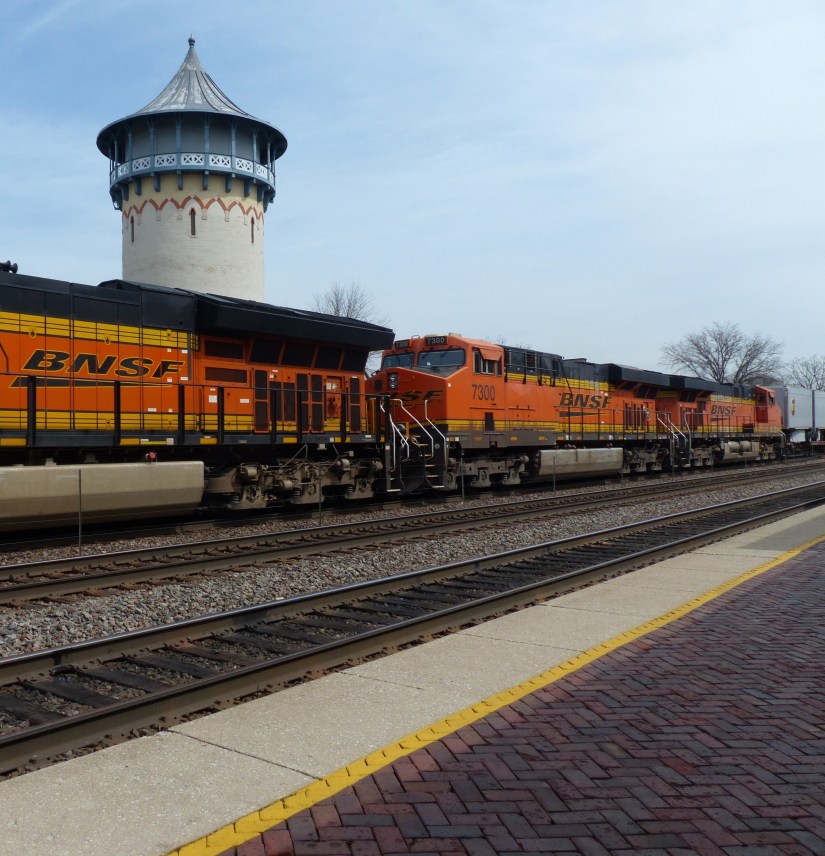
Second unit in the WB stacker
10 April 2024
Locomotive specs:
Model: GE ES44DC
Serial number: 59844
Order number: 1952
Built: 4/2009
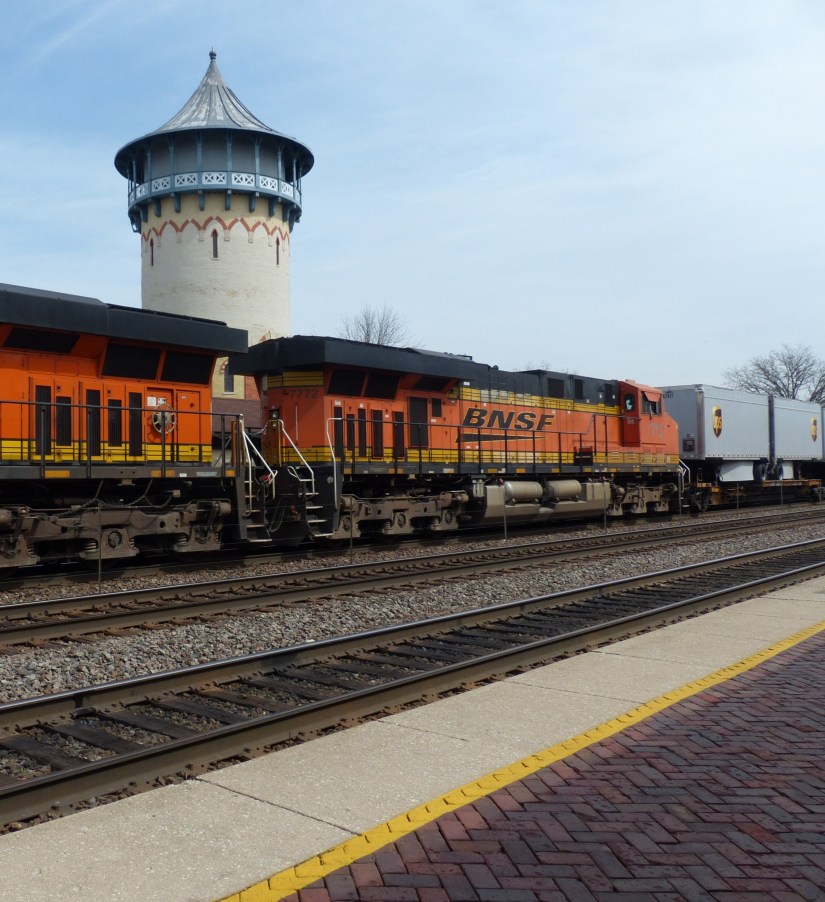
Third unit in the westbound stacker.
Locomotive specs:
Model: GE ES44DC
Serial number: 55832
Order number: 1986
Built: 6/2005
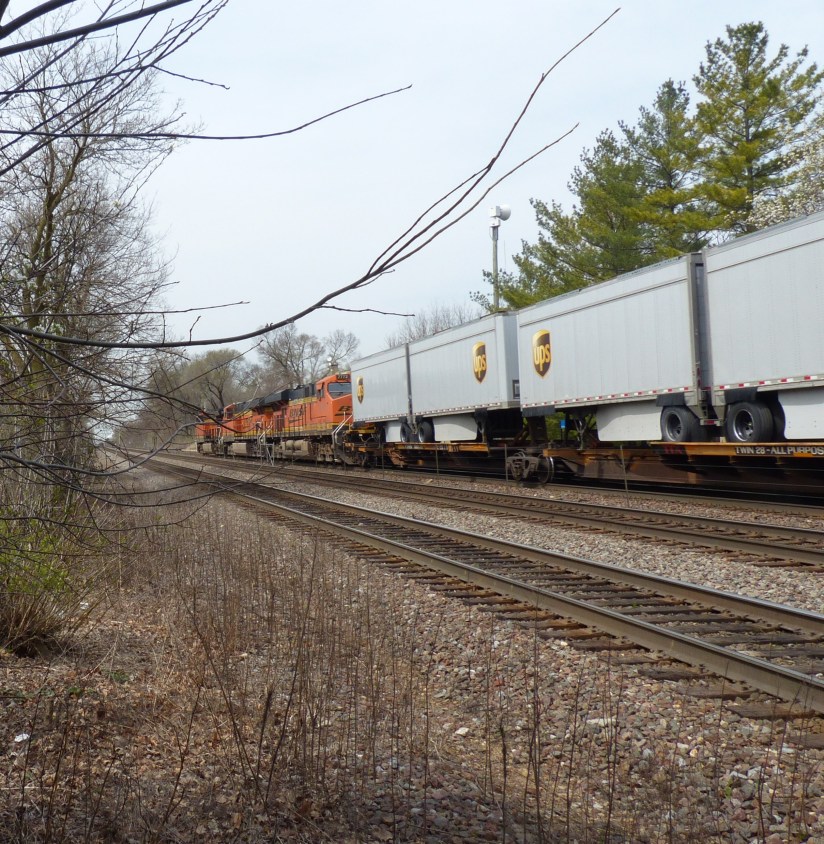
10 April 2024.
And now, special learning sections for young railfans and new railfans. Enjoy!
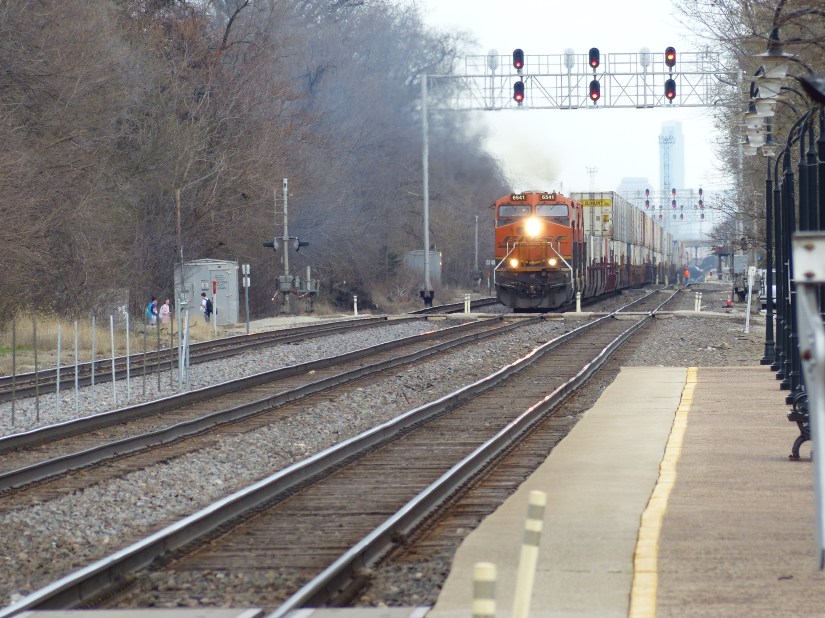
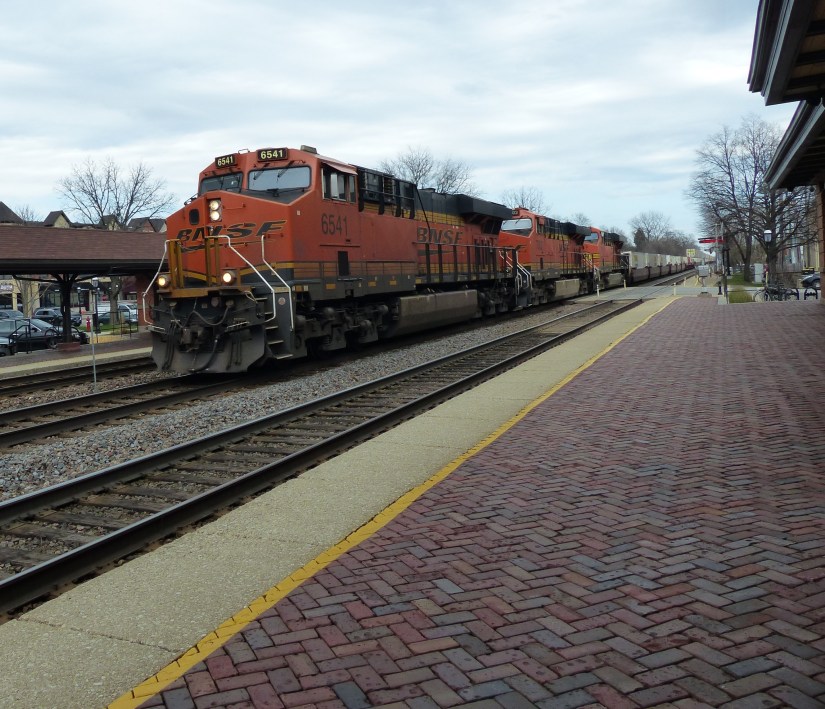
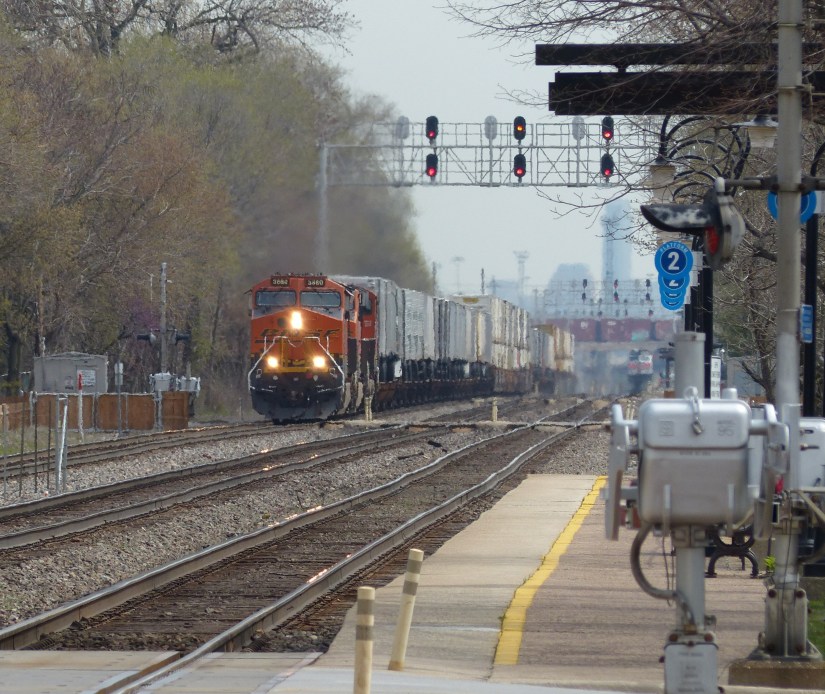
Kid‑Friendly Caption for the First Photo showing BNSF #6541.
“This picture looks super close because the camera was zoomed in like powerful binoculars, making the big orange train and the signals look like they’re right in front of you.”
Kid‑Friendly Sidebar: Why the Photo Looks So Zoomed‑In
Why does everything look so close together? Because the camera was using a 600 mm‑equivalent zoom, which is like looking through super‑strong binoculars. Even though the train, the signals, and the containers were far apart in real life, the zoom makes them look like they’re stacked right on top of each other. That’s called telephoto compression, and it gives train photos that dramatic “the train is coming right at me!” feeling.
Why does the picture look extra neat? The photo was also cropped, which means the photographer trimmed the edges to show only the most exciting part — the bright orange locomotive, the glowing signals, and the long line of containers stretching into the distance.
Glossary for New Railfans — Terms from the 12 April 2022 Westbound Stacker.
Approach (Signal Aspect)
A yellow‑over‑red signal telling a train to keep going but be ready to stop at the next signal. In your stacker, Main 3 showed Approach while Mains 1 and 2 were at Stop.
Block
A section of track controlled by signals. Only one train can occupy a block at a time. The METRA train at Riverside was occupying the station block, which forced the stacker to slow down behind it.
Chicago Subdivision
A major BNSF mainline running through the western suburbs of Chicago. It’s triple‑track, extremely busy, and perfect for railfanning.
Consist
The ordered list of locomotives (and sometimes cars) making up a train. Your stacker had five locomotives: three on the head end and two DPUs.
DPU (Distributed Power Unit)
A locomotive placed mid‑train or at the rear and controlled remotely from the lead cab. Your stacker had:
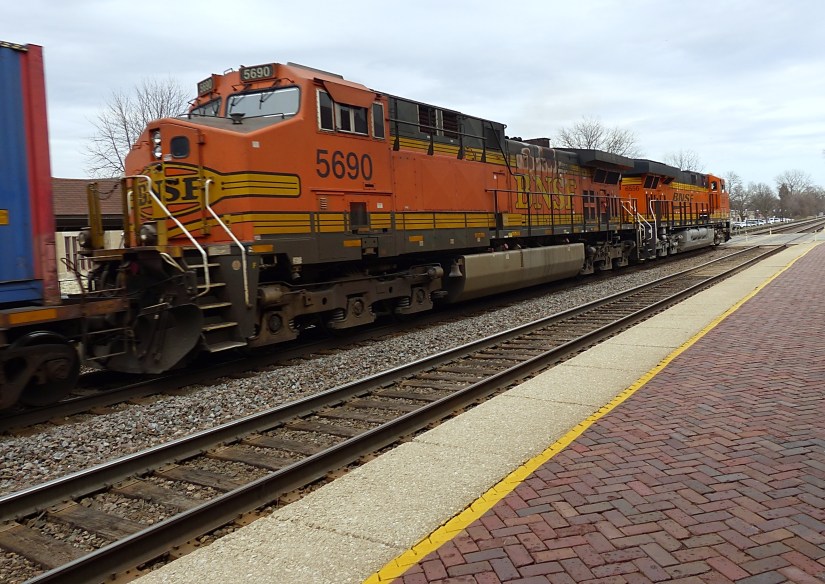
- BNSF 5690 — mid‑train DPU
- BNSF 6556 — rear DPU
ES44C4 / ES44DC / AC4400CW
Locomotive models built by GE.
- ES44C4: Uses four powered axles; common on intermodal trains
- ES44DC: Older DC‑traction version
- AC4400CW: Heavy‑haul AC‑traction unit, great for DPUs
Your consist had all three types.
Head End
The front of the train where the lead locomotives are. Your head‑end trio was:
- BNSF 6541 (lead)
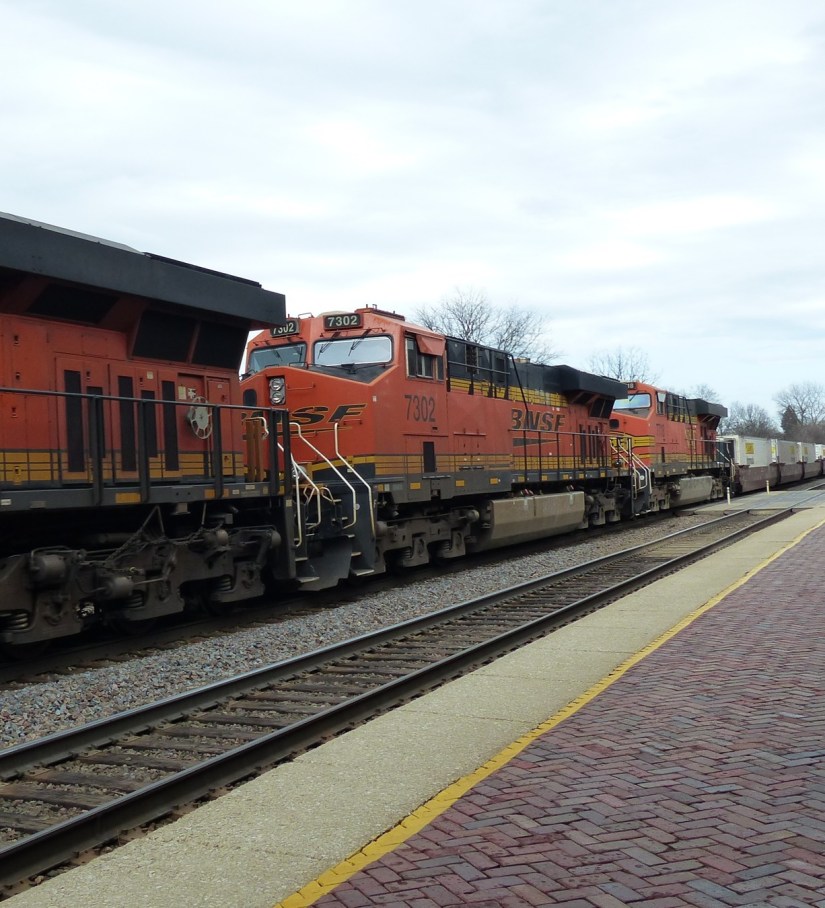
- BNSF 7302
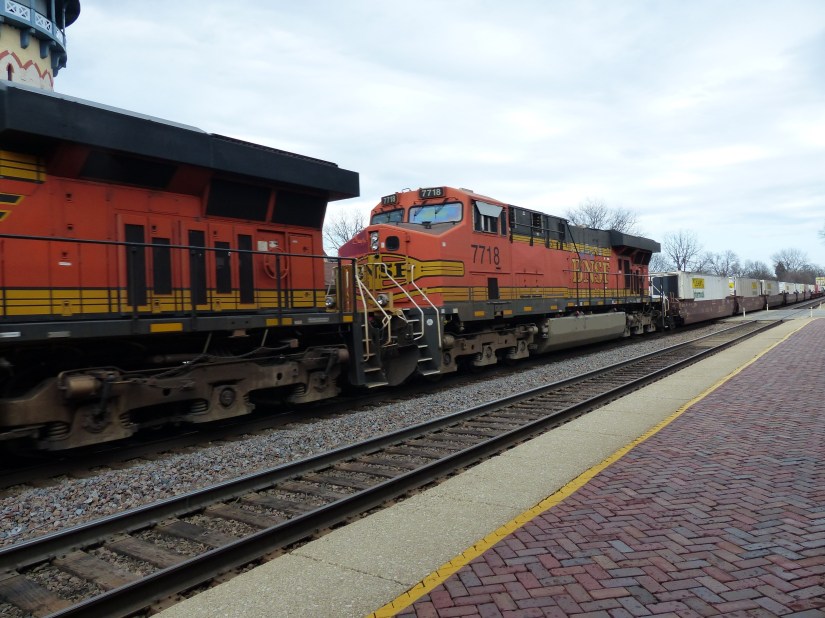
- BNSF 7718
Heritage 2 (H2) / Heritage 3 (H3)
BNSF paint schemes:
- H2: Orange and dark green with a “cigar band” stripe
- H3: Orange with the modern swoosh logo
Your consist had two H2 units (7718, 5690) and three H3 units (6541, 7302, 6556).
Intermodal Stacker
A freight train carrying double‑stacked shipping containers. These trains are long, fast, and common on the Chicago Sub.
Main 1 / Main 2 / Main 3
The three parallel tracks through Riverside.
- Main 1: Usually METRA
- Main 2: Often freight
- Main 3: Heavy freight and maintenance access
Platform 2 (South Platform)
Your usual vantage point at Riverside METRA Station. From here, you look east toward Cowley Road and can see the westbound signal gantry clearly.
Red Over Red (Stop)
A signal telling a train to stop before passing the signal. On 12 April 2022, Mains 1 and 2 were at Stop because the station block was occupied.
Riverside Road Crossing
The grade crossing at the west end of Riverside Station. It marks the entrance to the station block.
Signal Gantry
The overhead structure holding the three westbound signals. This is where you observed:
- M1: Red/red
- M2: Red/red
- M3: Yellow/red
Station Block
The section of track through the station. When METX #181 was stopped there, the stacker had to slow down and wait behind it.
Telephoto Compression
When a long focal length (like your 108 mm) makes distant objects appear closer together. This is why the gantry, containers, and locomotive nose look tightly stacked in your photo.
Westbound
Trains heading away from Chicago toward Aurora. Both the METRA train and the stacker were westbound in your sequence.
Glossary for Meets & Passes Based on the Meet of 10 April 2024
🚆💛 Kid‑Friendly “How to Watch a Meet Safely” Checklist
For young railfans on the BNSF Chicago Sub (Main 1 • Main 2 • Main 3)
- 🚧 Stay Behind the Yellow Line
Icon idea: 🚶♂️⬅️🟨🚆
The yellow line is your “safe zone.”
Trains can be wider, faster, and louder than they look — especially during a meet. - 👂 Listen for Trains from Both Directions
Icon idea: 👂⬅️➡️
On a triple‑track main line, trains can come from either side at any time.
Meets happen fast — always keep your ears open. - 👀 Look at All Three Tracks (Main 1, Main 2, Main 3)
Icon idea: 👀🛤️🛤️🛤️
Even if one track looks empty, another train might be approaching.
Trains can appear suddenly, especially on curves or behind buildings. - 🚦 Watch the Signals — They Tell You What’s Coming
Icon idea: 🔴🟡🟢
Signals above the tracks show which trains are allowed to move.
If you see yellow or green, a train may be coming soon. - 🤫 No Running, Jumping, or Playing Near Tracks
Icon idea: 🚫🏃♂️
Platforms are for watching, not playing.
Stay calm, stay steady, stay safe. - 🧍♀️🧍♂️ Stand with an Adult
Icon idea: 👩🦳🤝🧒
Always stay close to a grown‑up who can help you stay safe and aware. - 📸 Hold Your Camera or Phone Tight
Icon idea: 🤳✨
Strong winds from passing trains can surprise you.
Keep your hands steady and your feet planted. - 🚆💨 Trains Are Faster Than They Look
Icon idea: 🚆💨💨
Even slow trains can speed up quickly.
Never try to guess how fast a train is moving. - 🔊 Meets Are Loud — That’s Normal
Icon idea: 🔊🚆↔️🚆
When two trains pass each other, the sound gets BIG.
Cover your ears if you need to — it’s okay! - 🛑 Never Cross the Tracks Except at a Marked Crossing
Icon idea: 🚫🛤️
Only cross where there are gates, lights, and signs.
Never cross the tracks at the station. - 🚦 Respect the Crossing Gates
Icon idea: 🚧🔴
If the gates are down or the lights are flashing, stay back — even if you don’t see a train yet. - ⭐ Enjoy the Meet from a Safe Spot
Icon idea: 🙂📍🚆↔️🚆
Find a safe place on the platform, stay still, and enjoy the magic of two trains passing each other.
Clearance
What it means:
The safe space between trains or between a train and a platform.
Kid‑friendly version:
Never stand close to the yellow line — trains need room to pass safely.
Dispatcher
What it means:
The person who controls which train goes on which track — like an air‑traffic controller for trains.
How to spot their decisions:
Look at the signals. They show what the dispatcher has lined up.
Main Track
What it means:
The “big” tracks that trains use to go long distances.
On the BNSF Chicago Sub, there are three: Main 1, Main 2, Main 3.
How to spot it:
They’re the straightest, smoothest tracks with signals above them.
Meet
What it means:
Two trains going in opposite directions pass each other on different tracks.
How to spot it:
- One train comes from the left
- The other comes from the right
- They pass side‑by‑side like two cars on a highway
Why it’s cool:
You get twice the action at once.
Pass
What it means:
One train overtakes another train going the same direction, usually because it’s faster.
How to spot it:
- A slow freight is ahead
- A faster train (like METRA) catches up
- The faster train uses another track to go around
Why it’s cool:
You can see the speed difference up close.
Siding
What it means:
A smaller track next to the main tracks where a train can wait or let another train pass.
How to spot it:
It usually curves away from the main line and has switches at both ends.
Signal
What it means:
A colored light that tells the engineer what to do.
Kid‑friendly version:
Signals are like traffic lights for trains.
Examples:
- Green: Go
- Yellow: Slow down / be ready
- Red: Stop
Signal Aspect
What it means:
The pattern of lights on a signal (like “yellow over red”).
Why it matters:
It tells you which train is allowed to move and which one is waiting — super important during meets.
Consist
What it means:
The list of everything in a train: locomotives + cars.
Kid‑friendly version:
It’s the “recipe” for the train.
Lead Unit
What it means:
The locomotive at the very front of the train.
Kid‑friendly version:
The “engine that pulls the train.”
DPU (Distributed Power Unit)
What it means:
A locomotive placed in the middle or end of a long train to help push or pull.
Kid‑friendly version:
A helper engine that makes sure the train doesn’t get tired.
Push‑Pull Train
What it means:
A train that can be driven from either end — like METRA.
Kid‑friendly version:
Sometimes the locomotive is in the back pushing instead of pulling.
Cab Car
What it means:
A passenger car with a driver’s cab at one end.
Kid‑friendly version:
It looks like a regular coach, but it can drive the train.
Meet Point
What it means:
The exact spot where two trains pass each other.
Kid‑friendly version:
The “high‑five moment” between trains.
Block
What it means:
A section of track controlled by signals.
Kid‑friendly version:
The railroad divides the tracks into invisible “rooms,” and only one train can be in a room at a time.
Crossover
What it means:
A pair of switches that lets a train move from one main track to another.
Kid‑friendly version:
A railroad “lane change.”
Right‑of‑Way
What it means:
Which train gets to go first.
Resources
- “BNSF #6541.” RRPictureArchives.net, https://www.rrpicturearchives.net/Locopicture.aspx?id=180517. Accessed 24 February 2026.
- Copilot. “Description of the Metra Safety‑Stripe Livery on METX #181.” 24 Feb. 2026.
- “Pictures of METX 181.” RR Picture Archives, http://www.rrpicturearchives.net/locoPicture.aspx?id=2736&Page=1. Accessed 24 Feb. 2026.
- Corridor Schematic. [079497N Cowley Rd] — (approx. 0.2 mi) — [079495A Herbert Rd Pedestrian] — (approx. 0.3 mi) — [079498V Riverside Rd]. 24 February 2026
- Federal Railroad Administration. Rail Crossing Locator: U.S. DOT Crossing ID 079495A (Herbert Road Pedestrian Crossing). U.S. Department of Transportation, (fra.dot.gov in Bing).
- Federal Railroad Administration. Rail Crossing Locator: U.S. DOT Crossing ID 079497N (Cowley Road Grade Crossing). U.S. Department of Transportation.
- “BNSF 7302.” RRPictureArchives.net, https://www.rrpicturearchives.net/Locopicture.aspx?https://www.rrpicturearchives.net/Locopicture.aspx?id=121511
- “BNSF 7718.” RRPictureArchives.net, https://www.rrpicturearchives.net/Locopicture.aspx?id=48703
- “BNSF Railway’s H1, H2, and H3 Paint Schemes Side by Side.” RRPictureArchives.net, https://www.rrpicturearchives.net/showPicture.aspx?id=4269181.
- “BNSF 5690.” RRPictureArchives.net, https://www.rrpicturearchives.net/Locopicture.aspx?id=33613 .
- “BNSF 6556.” RRPictureArchives.net, https://www.rrpicturearchives.net/Locopicture.aspx?id=181714.
- Copilot. “Corridor Schematic Explanation: Cowley Road, Herbert Road, and Riverside Road Sequence.” Microsoft Copilot, 24 Feb. 2026.
- Wikipedia contributors. “35 mm equivalent focal length.” Wikipedia, The Free Encyclopedia. Wikipedia, The Free Encyclopedia, 16 Feb. 2024. Web. 25 Feb. 2026.
- “METX 211.” RR Picture Archives, (rrpicturearchives.net in Bing)
- Keogh, Paul. “BNSF 3680s GE Data Plate.” RR Picture Archives, 23 Dec. 2022, (rrpicturearchives.net in Bing)
- “BNSF 7300.” RR Picture Archives, https://www.rrpicturearchives.net/LocoPicture.aspx?id=18662
- “BNSF 7772.” RR Picture Archives, https://www.rrpicturearchives.net/locopicture.aspx?id=44709
- Illustrated Glossary. Divi. “Kid‑Friendly Illustrated Glossary: Meets and Passes on the BNSF Chicago Subdivision.” Microsoft Copilot, Feb. 2026.
- Meet‑Safety Checklist. Divi. “How to Watch a Meet Safely: A Kid‑Friendly Checklist for Young Railfans.” Microsoft Copilot, Feb. 2026.
- Kid‑Friendly Attribution Line. Created with help from Microsoft Copilot to keep young railfans safe and confident around trains.
- “METX 195.” RRPictureArchives.net, http://www.rrpicturearchives.net/locoPicture.aspx?id=1585&Page=3 (rrpicturearchives.net in Bing). Accessed 25 Feb. 2026.
- “Telephoto Compression and Focal‑Length Analysis for AMTRAK #82.” Microsoft Copilot, 25 Feb. 2026. AI‑generated explanatory text.
 Frame the Works